1.Consumer Profile
1.1 Age and Gender Structure
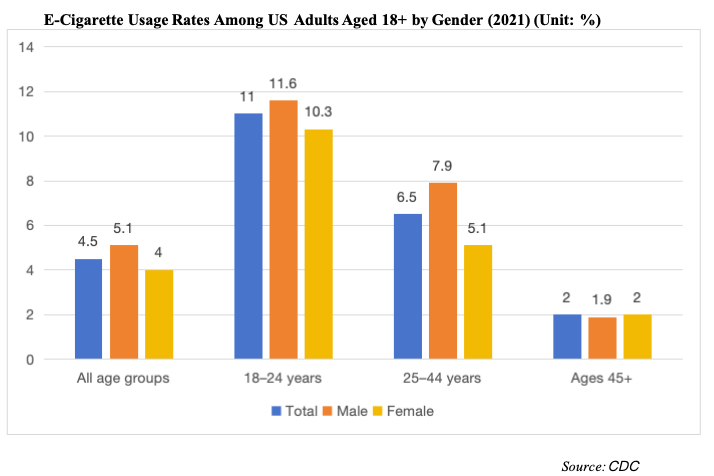
According to data from the US National Health Interview Survey, 4.5% of adults aged 18 and over are e-cigarette users, with usage rates among males higher than among females. The age group with the highest e-cigarette usage rate is 18–24 years old, at 11%. For both males and females, e-cigarette usage rates decrease with age. This indicates that e-cigarettes are more likely to attract younger users rather than middle-aged or older adults.
1.2. Age and Race/Ethnicity Structure
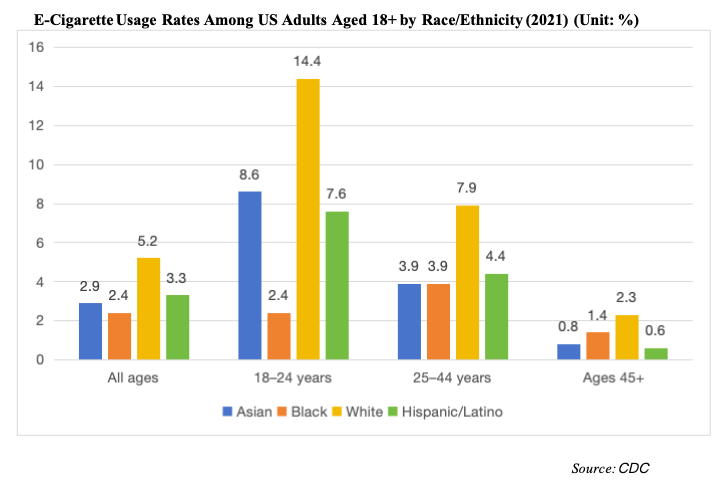
According to data from the US National Health Interview Survey, among adults aged 18 and over, White adults have the highest e-cigarette usage rate at 5.2%, followed by Hispanic or Latino adults at 3.3%. Across all age groups, White adults consistently have the highest e-cigarette usage rates. In the 18–24 age group, Asian users have the second‑highest usage rate, at 8.6%, second only to White users. From a racial/ethnic perspective, e-cigarette products are most widely adopted among White users, while usage among young Asian users is also relatively high. Usage rates among Asian and Hispanic/Latino populations are likely to increase further in the future.
1.3 Age and Income Structure
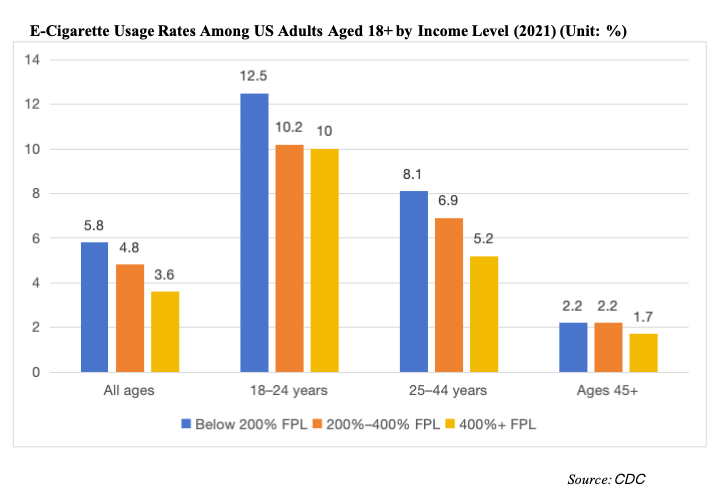
According to data from the US National Health Interview Survey, among adults aged 18 and over, those with household incomes below 200% of the Federal Poverty Level (FPL) (5.8%) are more likely to be e-cigarette users than those with household incomes between 200% and 400% of FPL (4.8%) and those with household incomes at or above 400% of FPL (3.6%). As household income levels rise, the proportion of adults using e-cigarettes generally declines. Higher‑income households may have stronger health awareness or different consumption habits, reducing the likelihood of e-cigarette use.
2.User Consumption Habits
2.1 Flavor Preferences
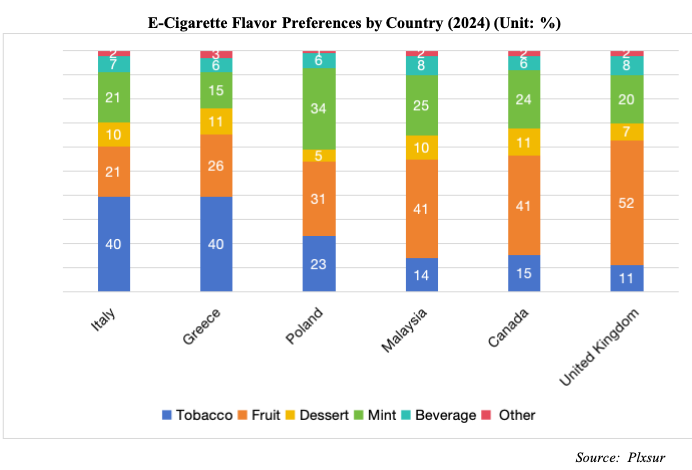
According to the Plxsur Global E-Cigarette Survey, there are significant differences in flavor preferences among e-cigarette users worldwide. In Italy and Greece, tobacco flavors remain the most preferred e-cigarette flavors. In Malaysia, Canada, and the United Kingdom, fruit flavors are the most preferred. Polish users show a stronger preference for mint flavors. Overall, fruit, tobacco, and mint are the top three flavor categories chosen by e-cigarette users across multiple countries.
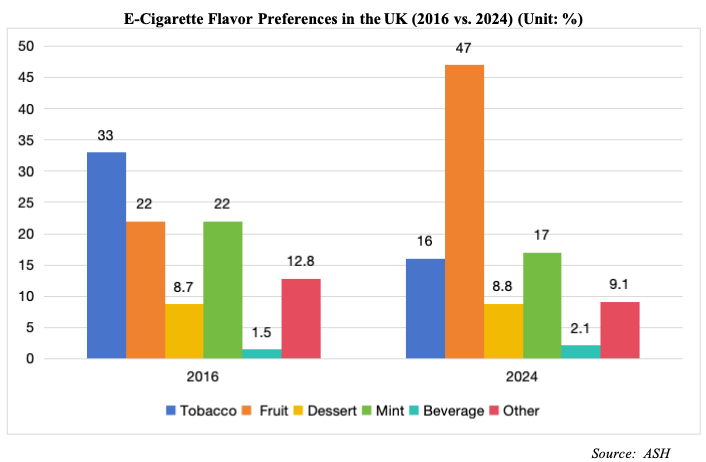
According to ASH survey data on e-cigarettes in the United Kingdom, from 2016 to 2024, the most commonly used flavors among UK e-cigarette users have shifted significantly. In 2016, tobacco flavor was the most popular, followed by fruit and mint. By 2024, fruit flavor had become the most popular, followed by mint and tobacco. This suggests that consumer flavor preferences can change noticeably over time, with the preference for tobacco flavors potentially declining significantly.
2.2 Device Usage Habits
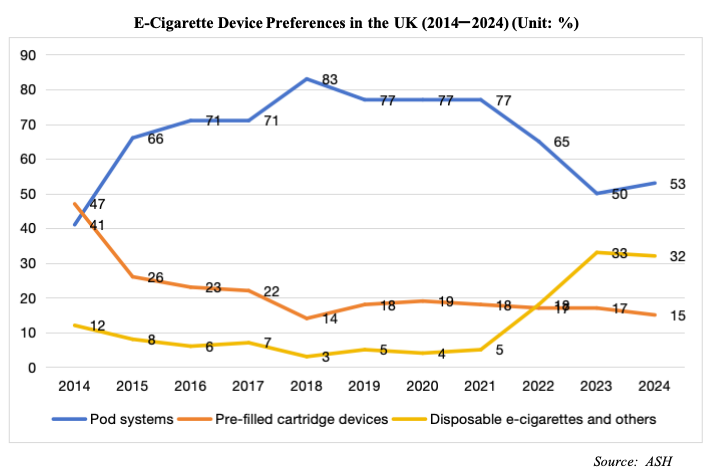
According to ASH survey data on e-cigarettes in the United Kingdom, since 2015, the most commonly used e-cigarette device among UK users has been pod systems. Disposable e-cigarette usage increased steadily after 2021 but has declined since 2023. The use of pre‑filled cartridge devices has continued to decrease. Currently, pod systems are the most common product in the UK market.
The primary factors influencing e-cigarette users' choice of device are convenience of use and device price. The most common reasons for choosing disposable e-cigarettes are convenience of use (32%), availability of desired flavors (21%), and lower cost (11%). For pod‑based devices, the most common reasons are convenience of use (28%) and lower cost (12%). For tank‑based devices, the most common reasons are lower cost (25%), ability to choose nicotine strength (16%), and convenience of use (13%). However, users have not reached a consensus on which device type offers a clear advantage in both convenience and affordability.
3.Impact of Health Awareness Changes on Consumer Behavior
3.1Motivation for E-Cigarette Use
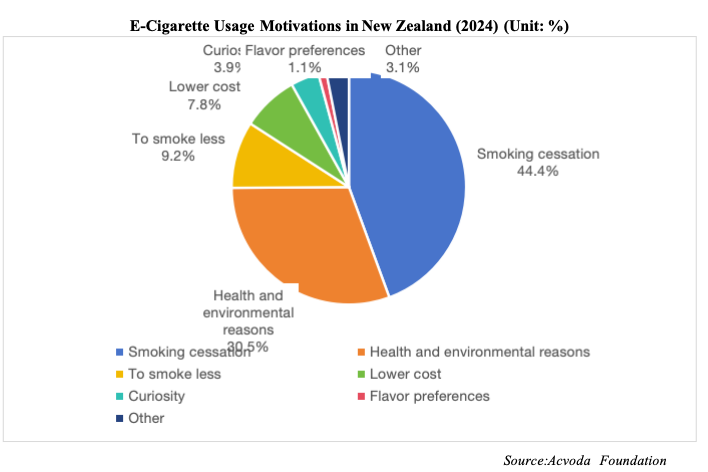
According to a survey conducted by the Acvoda Foundation in New Zealand following the implementation of flavor bans, among 907 surveyed users, 95% were e-cigarette users. Over 98% of these e-cigarette users were former traditional cigarette smokers before using e-cigarettes.
In terms of motivations for using e-cigarettes: 44.4% of users chose smoking cessation, 30.5% were driven by health and environmental considerations, 9.2% chose e‑cigarettes to smoke less, 7.8% cited lower cost, only 3.9% were motivated by curiosity or interest, and 1.1% cited flavor preferences. Given that the study sample focused on smokers, this indicates that for New Zealand e‑cigarette consumers, health improvement is the primary motivation for choosing e‑cigarettes. Improved health awareness among smokers strongly promotes the shift to e‑cigarette consumption.
3.2 Impact of E-Cigarette Use
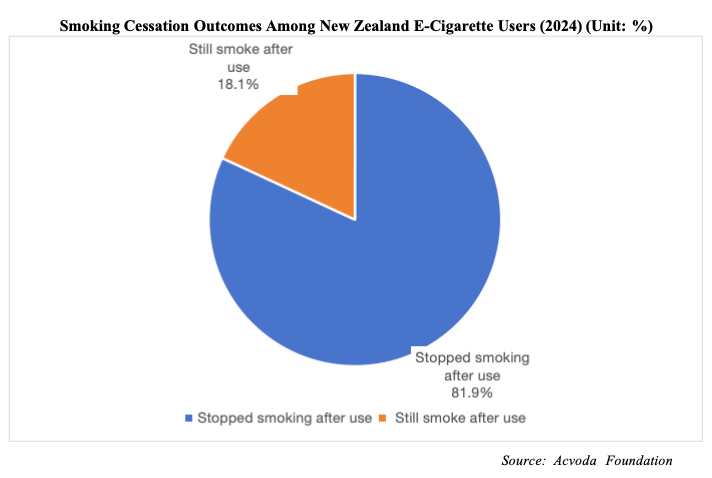
Among surveyed New Zealand users, over 80% no longer use traditional tobacco products after starting e‑cigarettes, while less than 20% continue to use traditional tobacco products alongside e‑cigarettes. This suggests that e‑cigarette use has a strong substitution effect on traditional tobacco products.
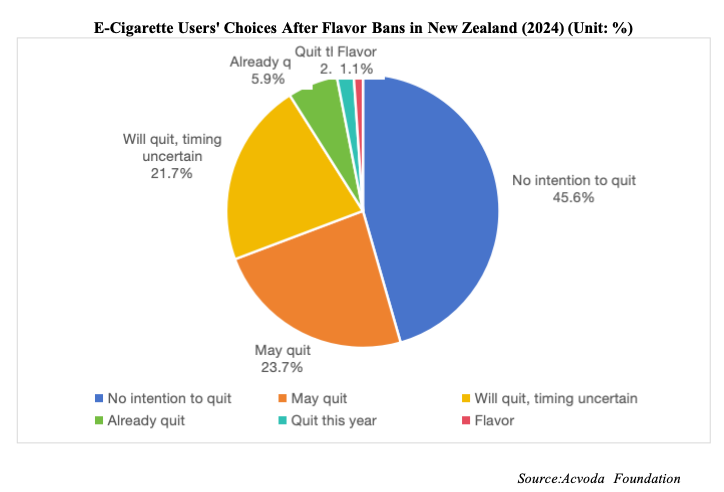
Following the implementation of flavor bans in New Zealand, 46.1% of current e‑cigarette users have no intention of quitting e‑cigarettes, 24.0% may quit, and 22.0% plan to quit but have not set a timeline. Only 6.0% and 2.0% of users have already quit or plan to quit this year, respectively.
4.The Role of Social Media and Online Marketing in Driving Purchase Decisions
4.1 Social Media Use and E-Cigarette Use
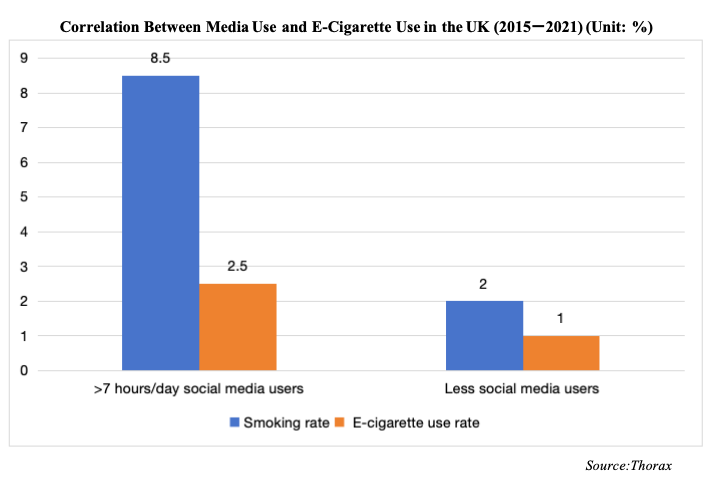
Research published in the journal Thorax (UK) indicates a strong correlation between weekday social media usage and smoking or e-cigarette use among individuals aged 10–25. The study, based on a sample of 10,808 young participants in the UK between 2015 and 2021, found that among those spending more than seven hours per day on social media platforms, 8.5% reported smoking and 2.5% reported using e-cigarettes. In contrast, among those spending less time on social media, only 2% reported smoking and less than 1% reported using e-cigarettes.
The study suggests that the increased risk of smoking and e-cigarette use among young people may be partially attributed to aggressive marketing strategies on social media. Tobacco and e-cigarette companies may employ algorithm‑based targeting to reach specific demographic groups, or pay social media influencers to frame smoking and vaping activities as trendy and culturally relevant. As a result, frequent social media users are more likely to be exposed to curated and idealized e-cigarette content.
4.2 Online Sales and E-Cigarette Consumption
Online sales provide significant convenience for e-cigarette consumers, allowing them to browse and purchase a wide variety of products from home without visiting physical stores. This accessibility has contributed to the broader adoption of e-cigarettes, particularly among younger demographics.
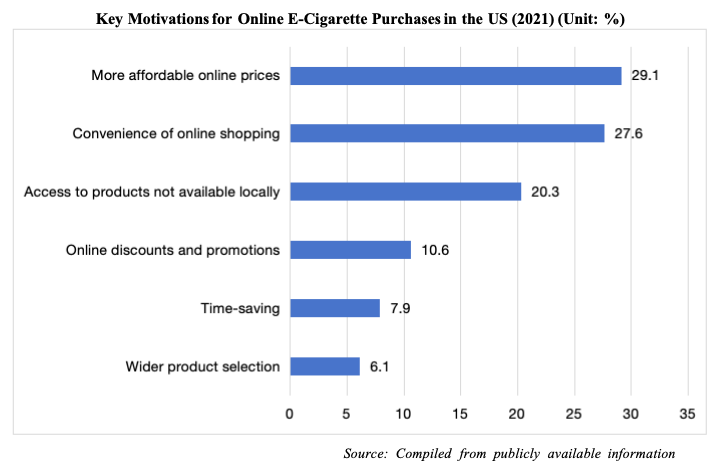
According to a study by Jessica L. King Jensen et al. on the motivations behind online e-cigarette purchases, the three primary reasons consumers choose to buy e-cigarettes online are lower online prices (29.1%), convenient purchasing experience (27.6%), and access to products not available in physical stores (20.3%).
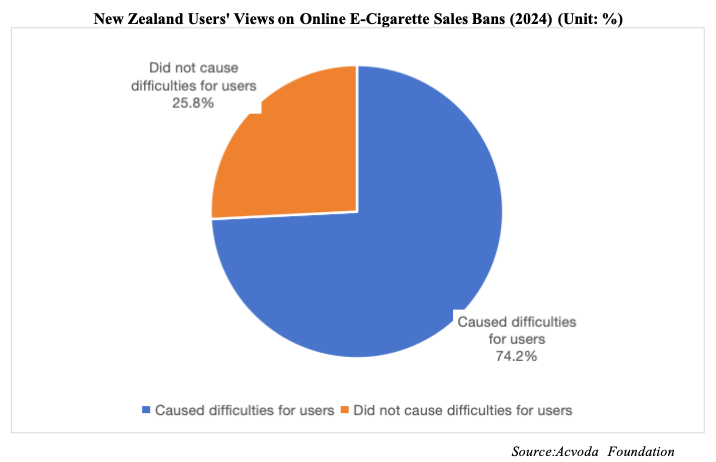
According to a survey by the Acvoda Foundation, online sales bans on e-cigarettes have caused difficulties for more than 70% of e-cigarette consumers. Fewer than 30% of users reported that such bans did not affect them. This clearly demonstrates that the availability of online sales significantly influences e-cigarette users' purchasing decisions.