1. Global Pod systems E-Cigarette Sales Revenue
1. 1 Overall Global Pod systems E-Cigarette Sales Revenue
At present, the global Pod systems e-cigarette market is undergoing a structural adjustment phase. Since 2019, its share with in the overall e-cigarette market has gradually declined, reflecting changes in market dominance. The rapid rise of disposable e-cigarettes — driven by advantages in pricing, convenience, and flavor variety — alongside increasingly strict global regulations on flavored pods and environmental policies promoting product transformation, has created greater challenges for Pod systems systems in terms of product innovation and regulatory compliance.
However, several regions continue to show positive momentum. In North America, the FDA’s easing of menthol product approvals and intensified crackdowns on illicit products have reopened growth opportunities for compliant brands. In Europe, the upcoming disposable vape bans scheduled for 2025 are increasing demand for Pod systems alternatives, with markets such as the UK and Germany remaining active. Meanwhile, Southeast Asian countries including Malaysia are gradually establishing a foundation for long-term market expansion through pilot compliance policies.
Overall, although the global Pod systems e-cigarette market is facing adjustment pressures, policy optimization and structural opportunities continue to support its long-term development potential.
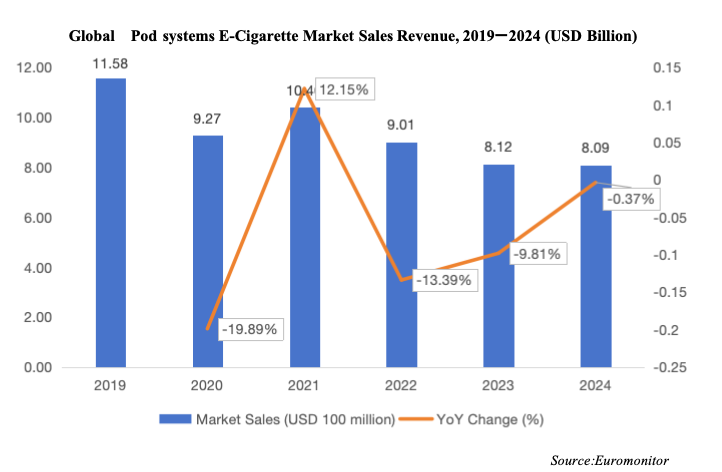
From 2019 to 2024, global Pod systems e-cigarette sales revenue showed a fluctuating trend. In 2024, the market size reached approximately USD 8.093 billion, representing a slight year-on-year decline of 0.37%.
1.2 Global Pod systems E-Cigarette Market Structure
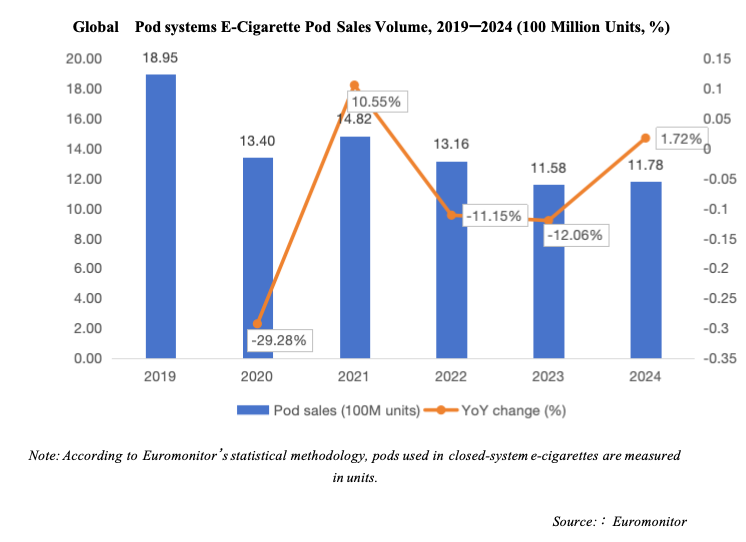
Between 2019 and 2024, the global Pod systems e-cigarette market demonstrated a structural pattern characterized by “device dominance and relatively stable pod sales.” Device sales consistently accounted for the majority share, while pod sales experienced only minor fluctuations and remained relatively stable overall.
The dominant position of device sales was largely supported by low-price strategies and government-backed initiatives in emerging markets. In Southeast Asia, affordable starter kits attracted a large number of first-time users, while the relatively long replacement cycle of devices provided sustained sales support.
However, the current device-driven growth model also reflects certain stage-specific limitations. On one hand, device prices remain relatively low, with some markets even adopting free distribution strategies. While this improves market penetration, it also creates challenges for establishing sustainable pod repurchase systems. On the other hand, the pod market faces pressures from taxation policies, regulatory restrictions in Europe and North America, as well as product stability concerns and competition from informal channels in emerging markets, all of which have slowed repurchase cycles and reshaped profit structures.
In 2024, devices accounted for 52.73% of the Pod systems e-cigarette market, while pods represented 47.27%.
2.Global Pod systems E-Cigarette Sales Volume
2.1. Global Pod systems Device Sales Volume
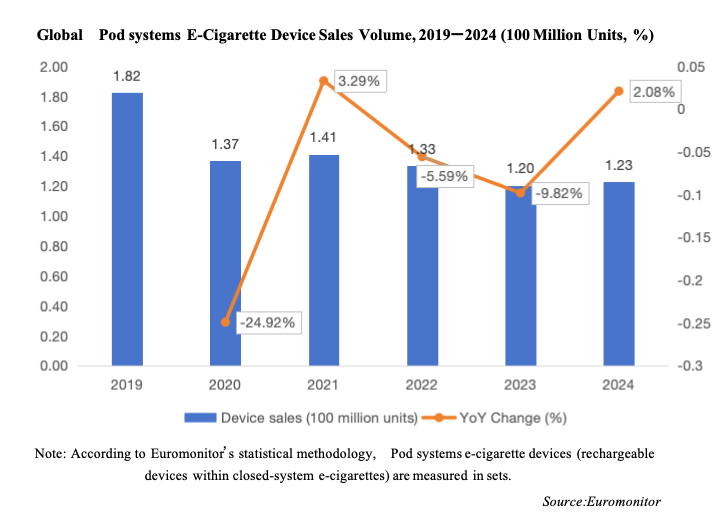
From 2019 to 2024, global Pod systems device sales volume experienced fluctuating changes. In 2024, sales volume recorded a modest recovery of 2.1%, although the market overall remained under pressure.
The decline was mainly driven by strict regulatory measures — such as FDA flavor bans and stringent PMTA reviews — which limited new product launches. At the same time, disposable products captured entry-level users through lower prices, while limited technological innovation led to severe product homogenization among pod devices.
The slight recovery in 2024 was primarily supported by low-price promotions in Southeast Asia, replacement demand driven by European policies, and government-led free distribution programs.
2. 2 Global Pod Sales Volume
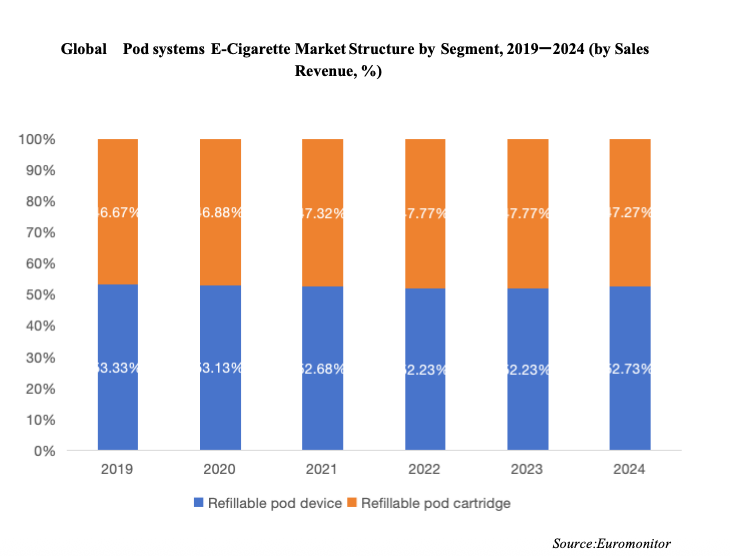
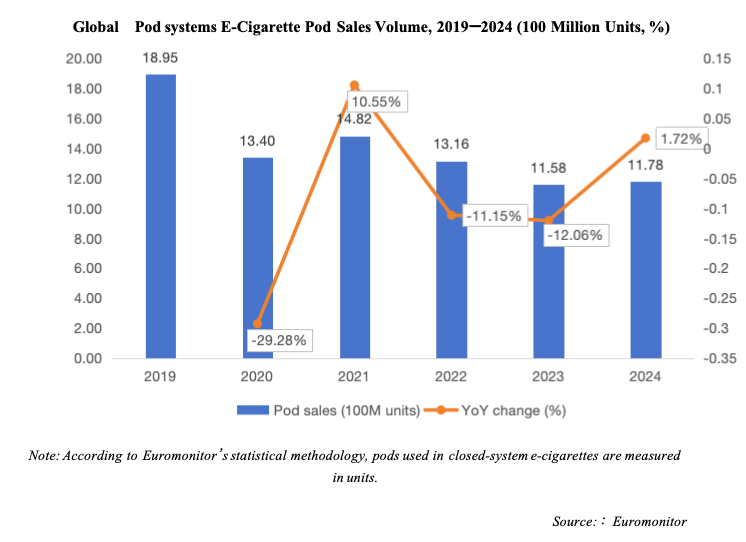
From 2019 to 2024, global pod sales volume also showed fluctuating changes, with an overall downward trend.
The key reasons behind the decline included increased policy-related costs — such as EU TPD regulations and higher taxation — which pushed up pod prices and reduced repurchase frequency. In emerging markets, technical issues such as high leakage rates further accelerated user attrition. In addition, low-priced illicit disposable products significantly weakened demand for compliant pods.
In 2024, pod sales volume increased by 1.72%, mainly driven by temporary policy advantages in the North American market and the impact of European environmental regulations.
3. Global Pod systems E-Cigarette Pricing
3.1. Global Pod Device Average Selling Price
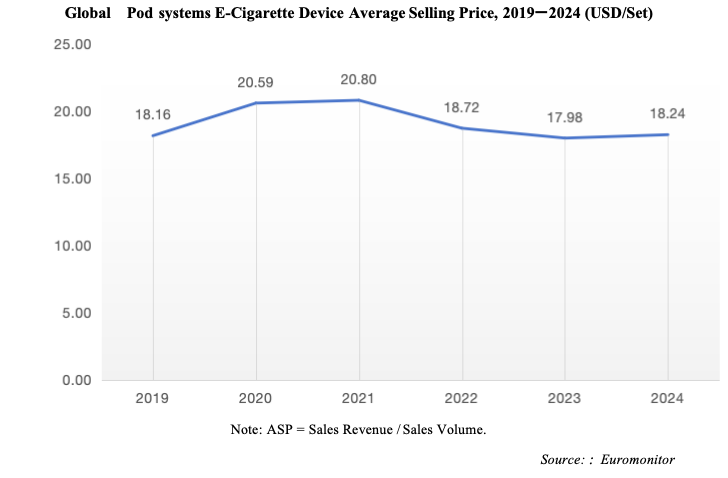
From 2019 to 2024, the average selling price of Pod systems e-cigarette devices followed a fluctuating trend of “rising first, then declining, before stabilizing.”
During 2020–2021, supply chain disruptions caused by the pandemic and technological upgrades — particularly the transition from cotton coils to ceramic coils — pushed the average price up to USD 20.80. Between 2022 and 2023, technological cost reductions and low-price strategies in emerging markets drove prices down to USD 17.98. In 2024, European environmental regulations and exchange rate fluctuations contributed to a slight rebound, bringing the average price to USD 18.24.
This pricing trend essentially reflects the industry’s dynamic balance between technological innovation, cost control, and regulatory adaptation. Early-stage cost pressures pushed prices upward, mid-stage technological breakthroughs and competition reduced prices, while later environmental regulations created new premium opportunities.
3.2. Global Pod Average Selling Price
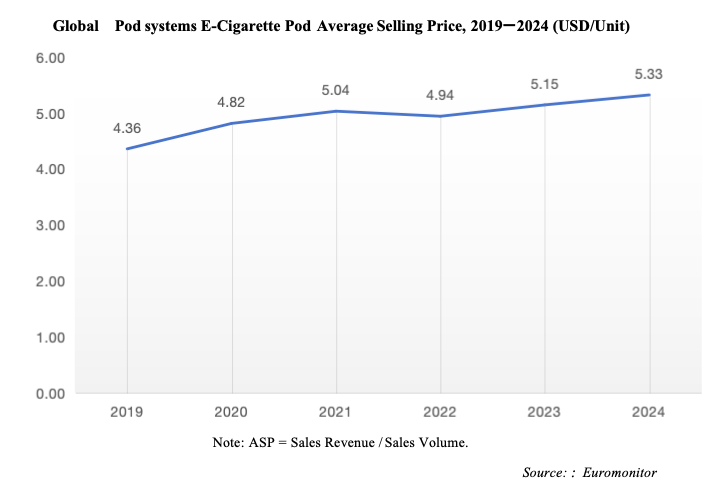
From 2019 to 2024, the average selling price of pods generally increased from USD 4.36 to USD 5.33. The increase was mainly driven by policy-related costs, technological upgrades, and supply chain fluctuations.
Additional taxation measures — such as e-liquid taxes introduced in Ireland and Germany — as well as capacity restrictions contributed to higher pricing. Furthermore, the premium associated with ceramic coil technology and environmental compliance requirements, including biodegradable materials and recyclable designs, also increased overall costs.
4. Global Regional Landscape of the Pod systems E-Cigarette Market
4.1 Global E-Cigarette Market Regional Structure Analysis
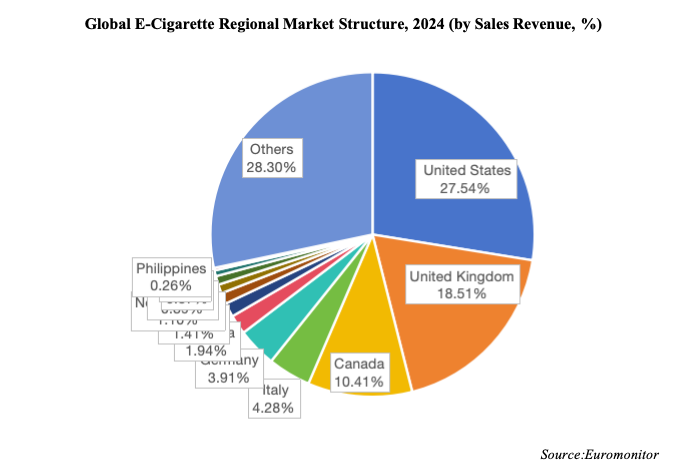
From the demand side, the global e-cigarette market in 2024 continued to be dominated by developed countries, with the United States alone accounting for more than 20% of global sales revenue, highlighting its position as the world’s largest e-cigarette consumer market.
Overall, North America and Western Europe together contributed more than half of total market sales revenue, indicating that the core purchasing power of the e-cigarette industry remains concentrated in regions with mature regulatory systems and strong consumer spending capabilities.
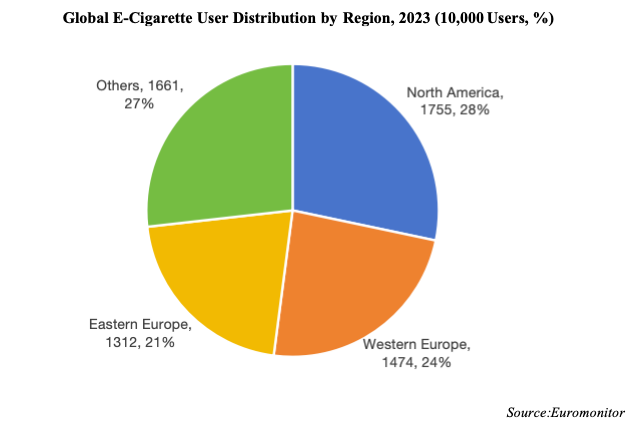
From the perspective of user distribution, North America had the largest number of e-cigarette users in 2023, reaching 17.55 million users. Western Europe and Eastern Europe followed with 14.74 million and 13.12 million users respectively, making them the world’s second and third largest markets.
4.2 Global Pod systems E-Cigarette Market Regional Structure Analysis
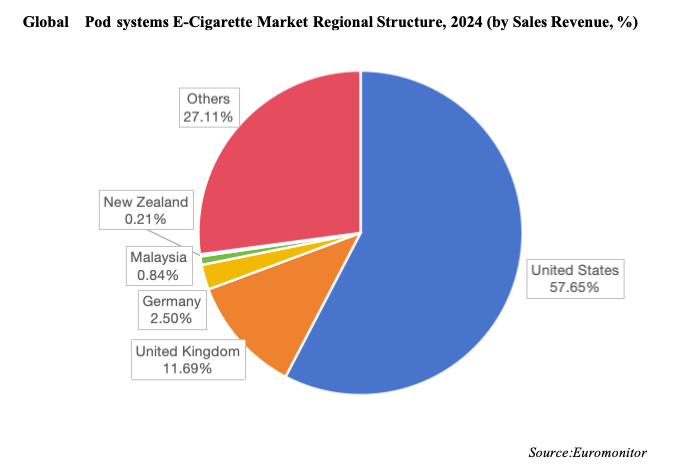
The global Pod systems e-cigarette market demonstrates a highly concentrated regional demand structure, with the United States maintaining a dominant position. In 2024, the U.S. accounted for 57.65% of total global market sales revenue.
The UK also held a significant market share of 11.69%, while Germany and Malaysia accounted for relatively smaller shares at 2.50% and 0.84%, respectively.
The United States remains the largest consumer market for Pod systems e-cigarettes, while European and other Western markets also contribute meaningful shares to the global market.
SEO Title
Global Pod Vape Market Report 2025: Sales Trends, Regional Analysis & Industry Outlook
SEO Description
Explore the latest global pod vape market trends from 2019–2024, including sales performance, device and cartridge demand, pricing shifts, regional market analysis, and the impact of regulations on the future of closed-system e-cigarettes.
#VapeIndustry #PodSystem #ECigarette #TobaccoHarmReduction #NicotineIndustry #VapeMarket #DisposableVape #NextGenTobacco #VapingRegulation #MarketResearch