1 Key Growth Drivers of the Global Pod systems Market
1. Regulatory Changes: Compliance Reshaping the Market Landscape
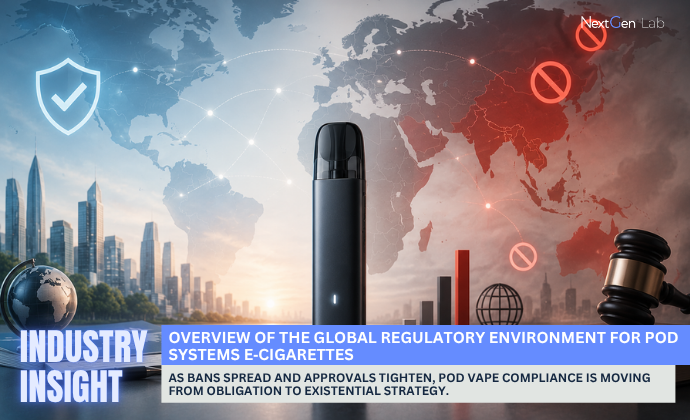
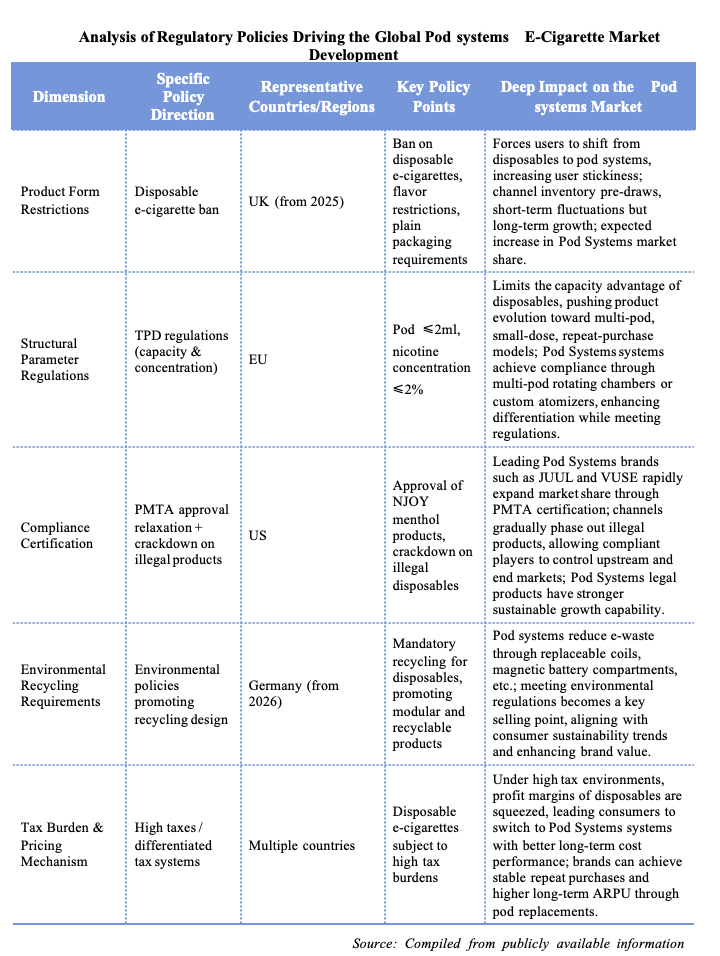
Against the backdrop of rapid global e‑cigarette market growth, tightening regulations have become a key driver reshaping product structures and market dynamics. Policies such as the UK’s 2025 disposable e‑cigarette ban, the EU’s TPD restrictions on pod capacity and nicotine concentration, the US PMTA approval framework coupled with crackdowns on illegal products, Germany’s 2026 recycling requirements, and high taxes on disposable products in multiple countries together form the core regulatory framework currently influencing market patterns. These policies systematically drive a structural shift toward pod‑based products by limiting alternative competition (e.g., disposables), mandating technical adaptations (e.g., eco‑design), reinforcing compliance barriers (e.g., PMTA certification), and guiding consumer behavior (e.g., tax adjustments).
1.2. Atomization Technology Innovation: Performance Upgrades Driving User Experience
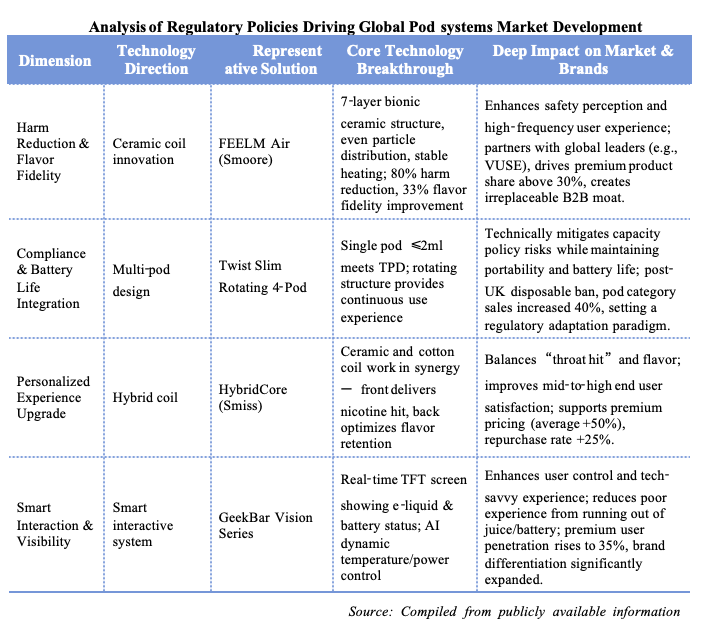
As regulations tighten and markets mature, consumer expectations for e‑cigarettes have shifted from “being able to vape” to “good taste, safety, and intelligence.” Technological innovation has become a core competitive factor in the pod‑based e‑cigarette market. Breakthroughs in ceramic coils, hybrid coils, multi‑pod structures, and smart systems have significantly improved atomization performance, flavor consistency, safety, compliance, and ease of use. These advancements solve pain points previously associated with disposable products – uneven e‑liquid consumption, uncontrollable nicotine release, poor flavor consistency, and user blind spots – driving users toward higher‑experience, higher‑value pod systems.
The commercial value of technology upgrades is also quickly emerging. On one hand, leading technology providers partner with top brands to enter global premium markets, creating technological moats and supply chain dominance. On the other hand, technology and regulations create synergies – for example, multi‑pod designs ensure TPD compliance while maintaining puff count and user experience, enhancing product viability in policy‑tight regions. Atomization technology has evolved from an “added value” for better flavor to a “foundational capability” that drives brand premium, user retention, and policy adaptability.
1.3. Evolving Consumer Behavior: Rising Demand for Sustainability & Cost‑Effectiveness
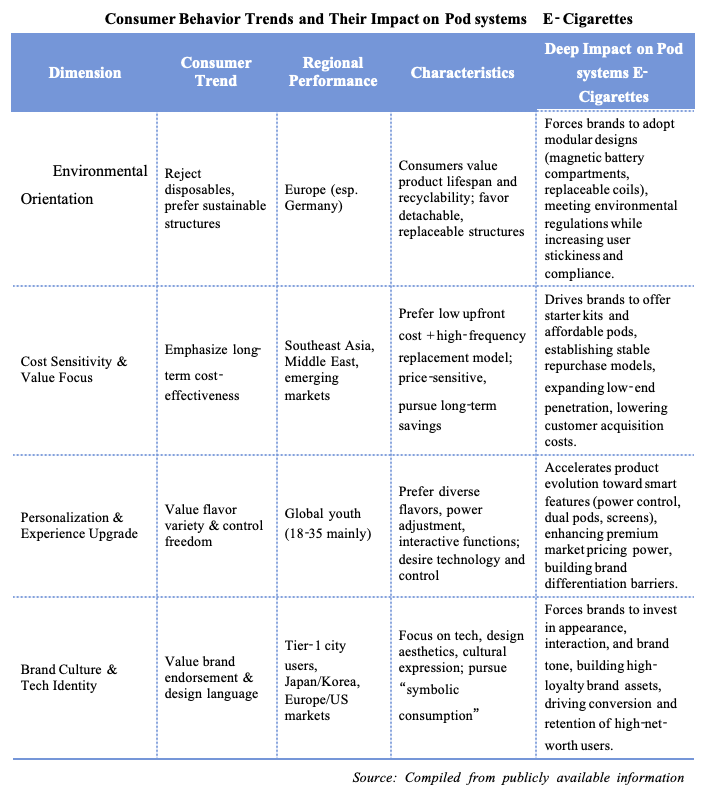
The global e‑cigarette user base is undergoing profound structural changes. Environmental responsibility awareness and long‑term usage costs are becoming key concerns for more and more consumers. Compared to “single‑use” disposable e‑cigarettes, pod‑based products – with their sustainability, reusability, and cost amortization – are gradually winning mainstream market favor. In Europe, green consumption is a leading trend; for example, over 70% of German consumers actively reject disposable e‑cigarettes, accelerating the adoption of modular designs (e.g., magnetic batteries, replaceable coils).
In price‑sensitive markets such as Southeast Asia, the economic advantages of pod systems are even more pronounced. After calculating long‑term usage costs, users tend to choose replaceable systems with slightly higher upfront costs but lower per‑use costs. Local brands launch affordable starter kits and high‑frequency pod refills, quickly building user loyalty and store traffic. Meanwhile, younger users demand flavor diversity and personalized experiences. Premium pod products featuring multi‑flavor switching, power adjustment, and other functions are becoming an upgrade direction, raising the category’s ceiling and brand premium capability.
1.4. Corporate Strategic Shifts: Giants Betting & Technology Tie‑ups
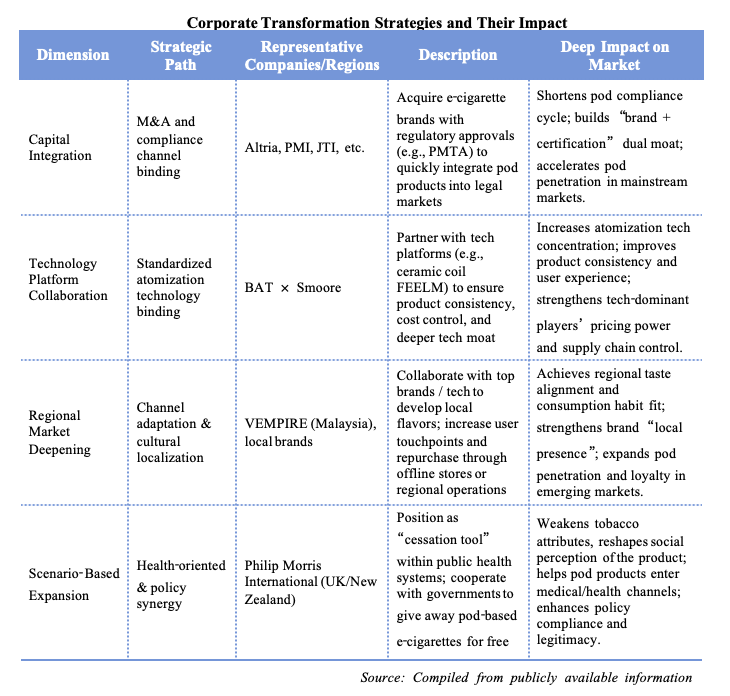
In the global market, traditional tobacco giants are accelerating their layout by acquiring compliant brands, integrating channels and certifications to build closed‑loop ecosystems. Technology suppliers, through deep cooperation with leading brands, are promoting the standardization and premiumization of atomization technology, increasing industry concentration and synergy. Regional players focus on local taste and cultural identity to enhance market penetration and user loyalty. Some multinationals position themselves as “smoking cessation tools” and cooperate with governments to expand public health scenarios, giving pod‑based products higher social value. These strategies collectively reshape the pod ecosystem into a multi‑dimensional solution integrating compliance, safety, experience, and functionality.
2.Challenges in the Global Pod‑Based E‑Cigarette Market
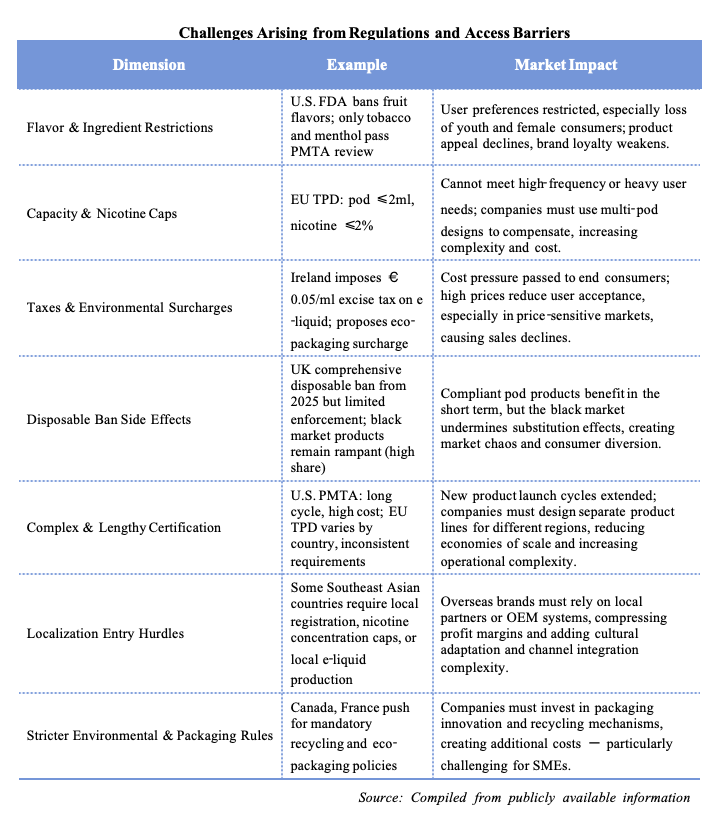
2.1. High Compliance Costs & Market Access Barriers
Regulations on e‑cigarettes vary significantly across regions, covering flavors, ingredients, capacity, taxation, environmental rules, bans, and more. Companies must navigate different regulatory systems and approval processes in different markets, which not only raises costs in product design, production, and distribution but also squeezes innovation space and increases reliance on local policy understanding and responsiveness. This complex compliance environment is becoming a major barrier to global expansion and is accelerating industry concentration.
2.2. Illegal Products & Black Market Squeeze
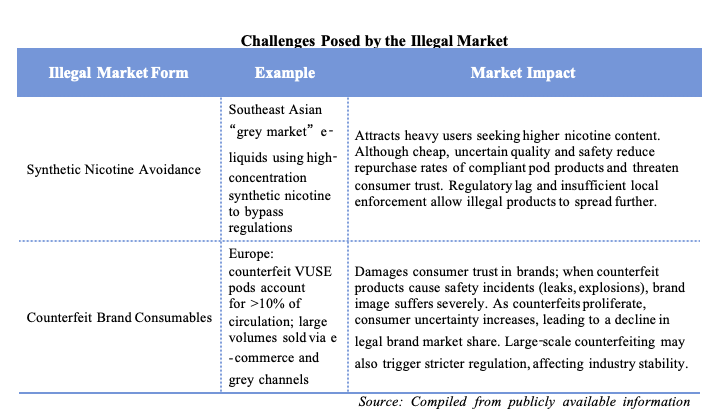
In the global pod‑based e‑cigarette market, illegal products and black market channels are becoming a major threat to the compliant market. Illegal products attract price‑sensitive users with low prices, circumvent regulatory standards, and counterfeit brand consumables, further eroding legal market share. Their low price advantage and illegal production networks make regulation and enforcement complex. The proliferation of black market smuggling, synthetic nicotine products, and counterfeit brands negatively impacts market competition, causes safety hazards in some cases, damages consumer trust in legal brands, and may even lead to stricter regulatory measures.
2.3. Environmental Pressure & Sustainability Bottlenecks
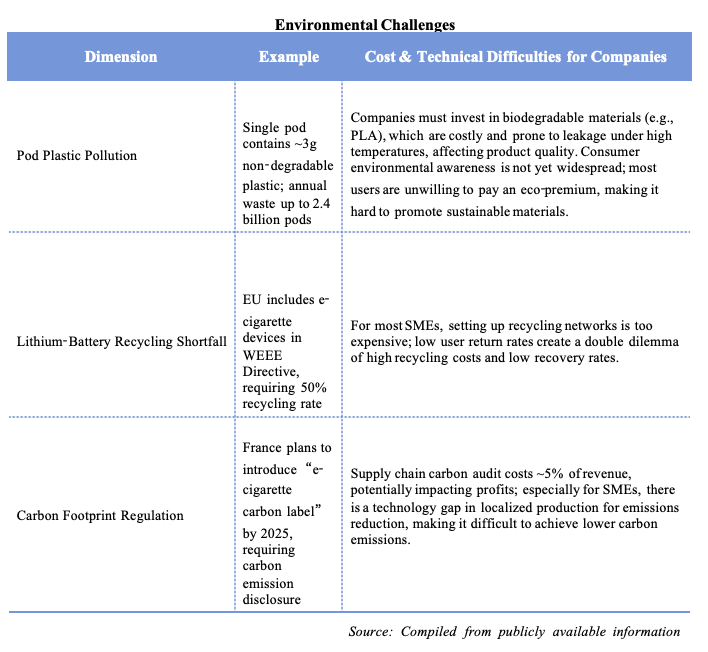
The global pod‑based e‑cigarette market is facing mounting environmental pressure and sustainability bottlenecks, primarily manifested in plastic waste from pods, lack of lithium‑battery recycling, and carbon footprint regulations. As environmental regulations escalate, companies must cope with rising compliance costs and technical challenges – yet consumer environmental awareness and willingness to pay may not keep pace. Eco‑requirements (biodegradable materials, recycling networks, carbon audits) increase production costs, while low consumer acceptance of green premiums creates a contradiction between environmental policy and market acceptance.
2.4. Diverging Consumer Habits & Alternative Competition
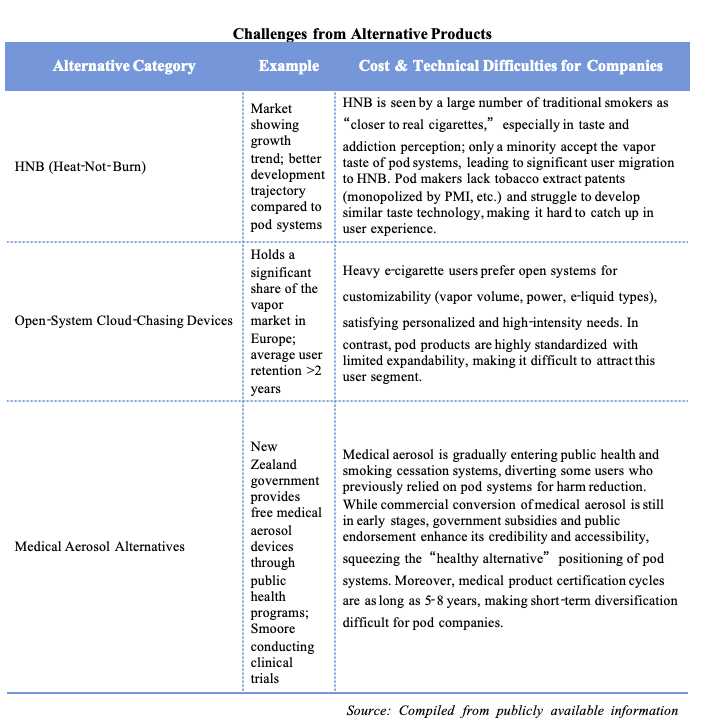
As user needs become increasingly diverse, pod‑based e‑cigarettes face growing competitive pressure from emerging alternatives. Products such as heat‑not‑burn (HNB), open‑system cloud‑chasing devices, and medical aerosol solutions offer more segmented use experiences in terms of taste, functionality, and health perception, meeting the personalized preferences of different consumer groups. The expansion of these technological pathways is continuously reshaping user choices and challenging the market positioning of pod products. In comparison, pod‑based e‑cigarettes still face limitations in innovation pace, technological breakthroughs, and regulatory adaptation. Companies must actively explore differentiated upgrades and diversified development paths while maintaining existing advantages to better respond to evolving substitution trends.