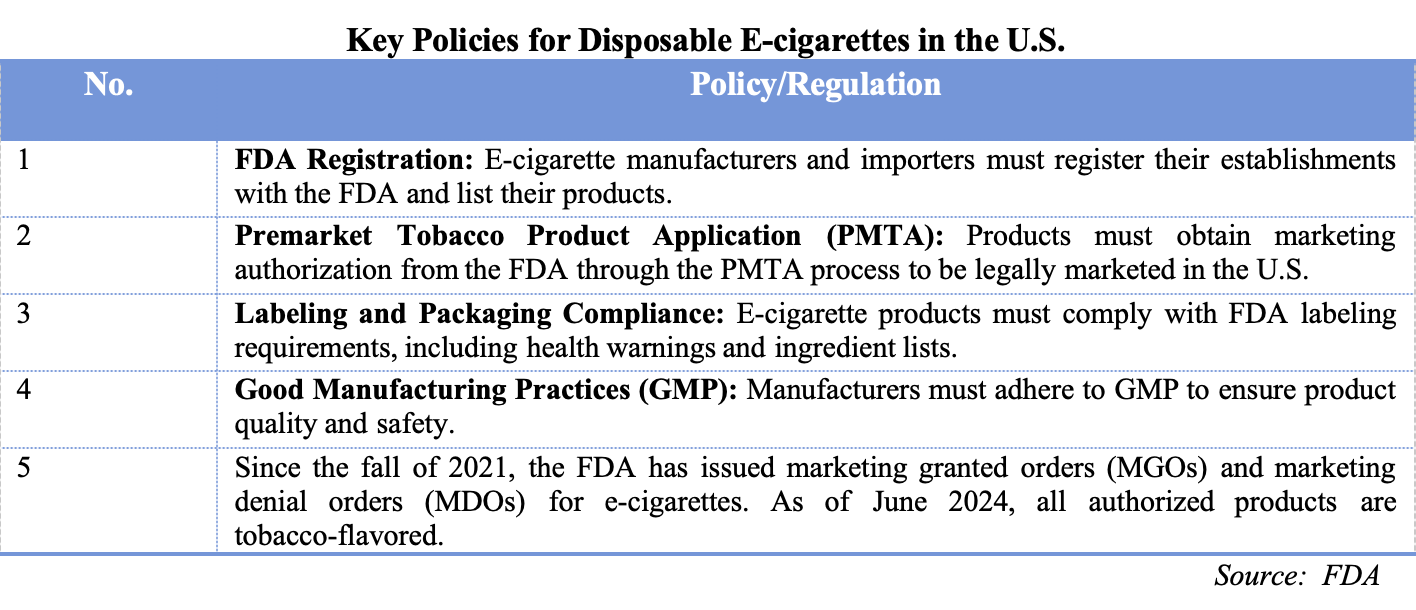
In the U.S. market, e-cigarette products are subject to stringent policies and regulatory measures. The Food and Drug Administration (FDA) and the U.S. International Trade Commission (USITC) have launched multiple investigations into disposable e-cigarettes to crack down on illegal sales and imports. Under the FDA's PMTA (Premarket Tobacco Product Application) requirements, all disposable e-cigarette products must submit an application to demonstrate they meet public health standards. The FDA's review process for PMTAs is extremely rigorous, resulting in many products being denied marketing authorization.
Additionally, the division between federal and state policies in the U.S. adds complexity to the overall regulatory landscape.
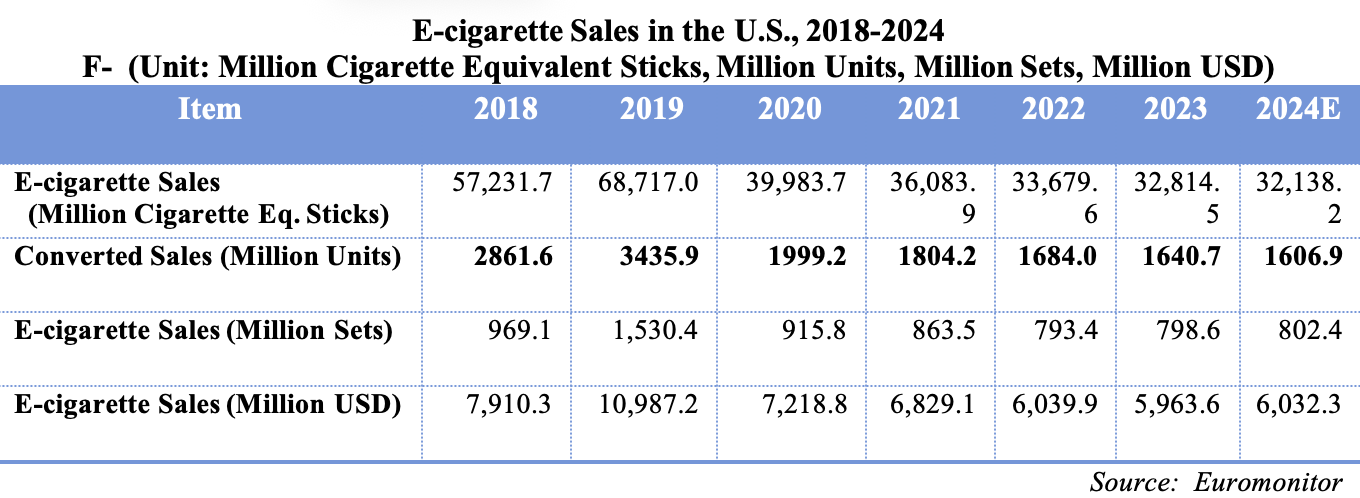
The FDA's PMTA process has significantly impacted the e-cigarette market. According to Euromonitor data, the U.S. e-cigarette market size showed an initial increase followed by a decline from 2018 to 2023. In 2023, e-cigarette product sales in the U.S. reached 1.641 billion units / 799 million sets, with sales revenue amounting to USD 5.961 billion.

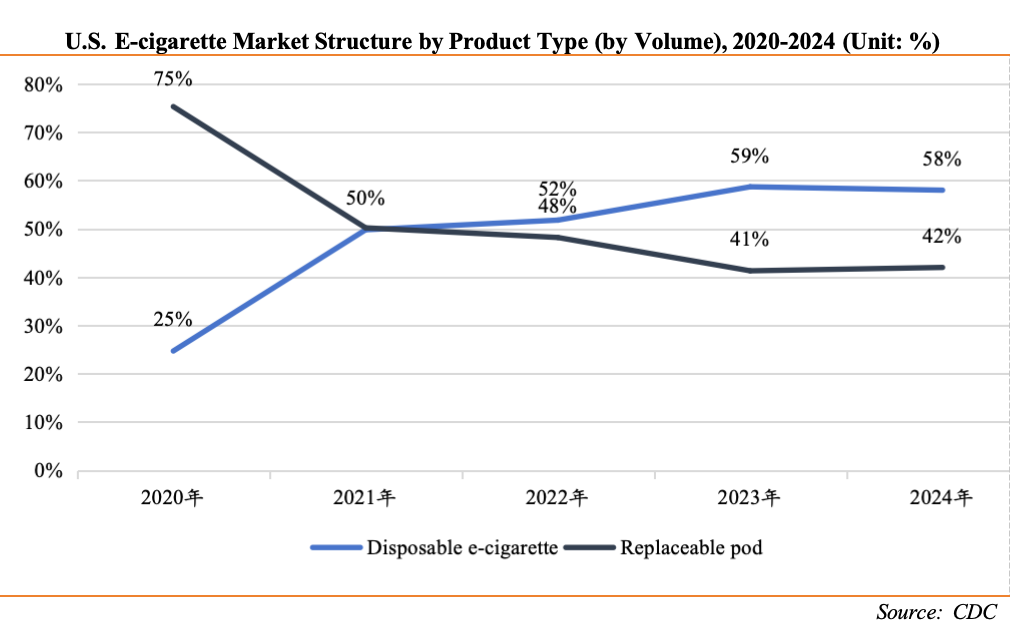
According to data from the Centers for Disease Control and Prevention (CDC), the proportion of e-cigarette users using open-system or closed-system devices decreased from 75% in 2020 to 42% in 2024. Meanwhile, disposable e-cigarettes rapidly captured a 58% market share.
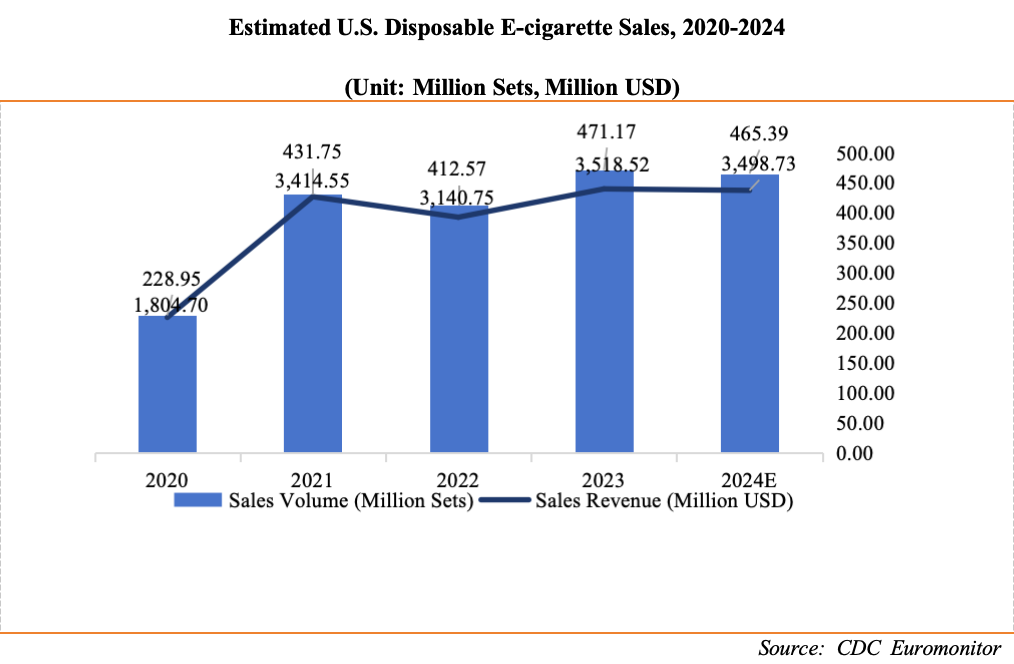
Based on CDC data calculations, in 2023, U.S. disposable e-cigarette sales volume reached approximately 471 million sets, with sales revenue of about USD 3.518 billion. In 2024, the sales volume is estimated at around 465 million sets, with sales revenue projected at approximately USD 3.499 billion.
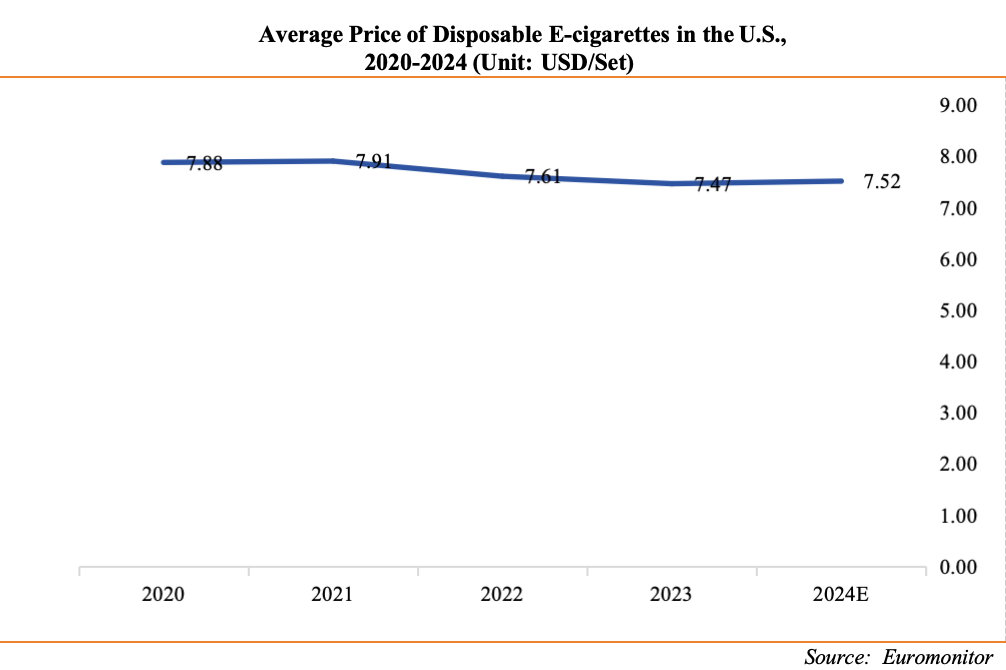
According to Euromonitor data, the average price of disposable e-cigarette products in the U.S. remained relatively stable from 2020 to 2024. The average price was USD 7.88 per set in 2020, remaining largely unchanged at USD 7.47 per set by 2023, and is estimated to be around USD 7.52 per set in 2024.
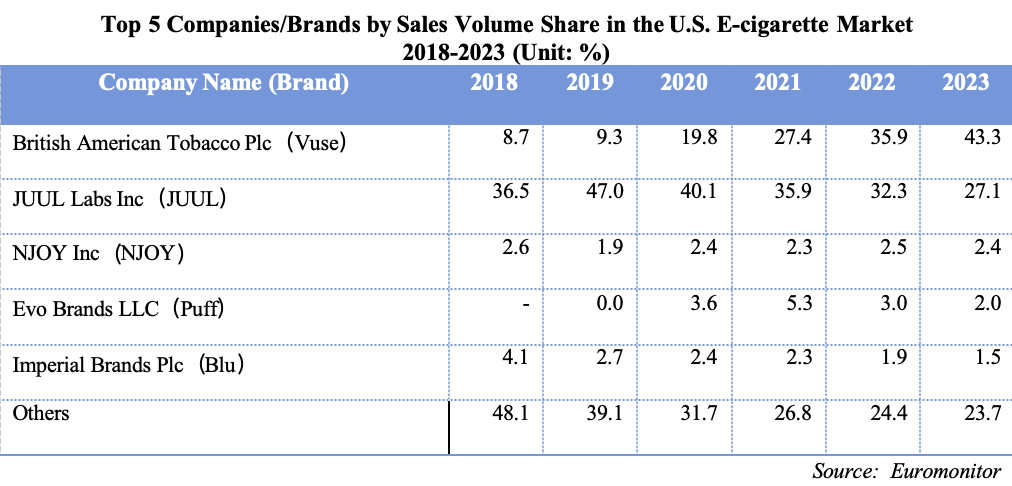
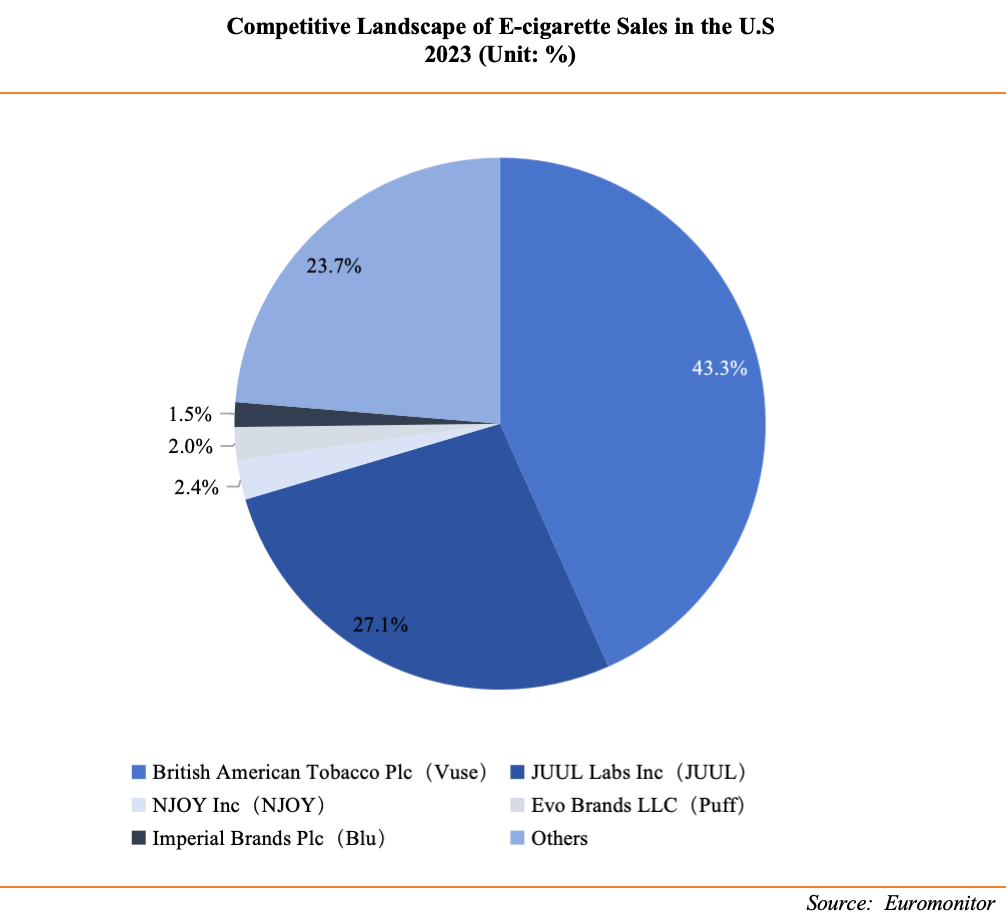
In 2023, British American Tobacco Plc (Vuse) ranked first in the U.S. e-cigarette market with a dominant 43.3% market share, followed by JUUL Labs Inc (JUUL) with 27.1%. The market shares of all other companies/brands were below 3%. Overall, the U.S. e-cigarette market is highly concentrated.
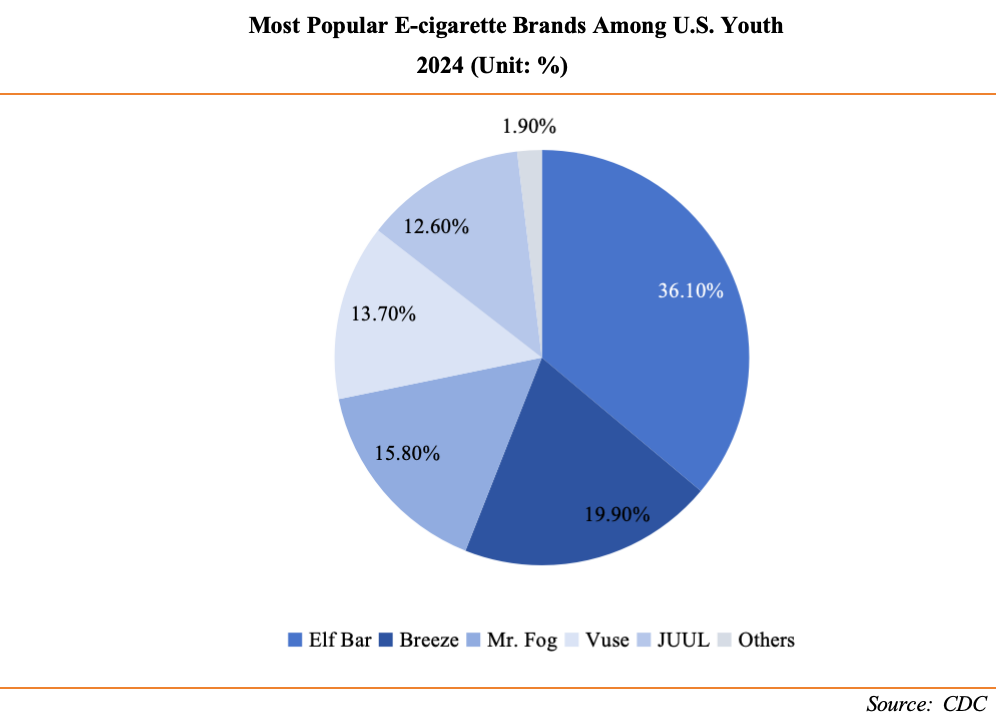
According to the 2024 National Youth Tobacco Survey released by the CDC, approximately 1.63 million middle and high school students used e-cigarettes in 2024. The most commonly used brands among youth e-cigarette users were: Elf Bar (36.1%), Breeze (19.9%), Mr. Fog (15.8%), Vuse (13.7%), and JUUL (12.6%).
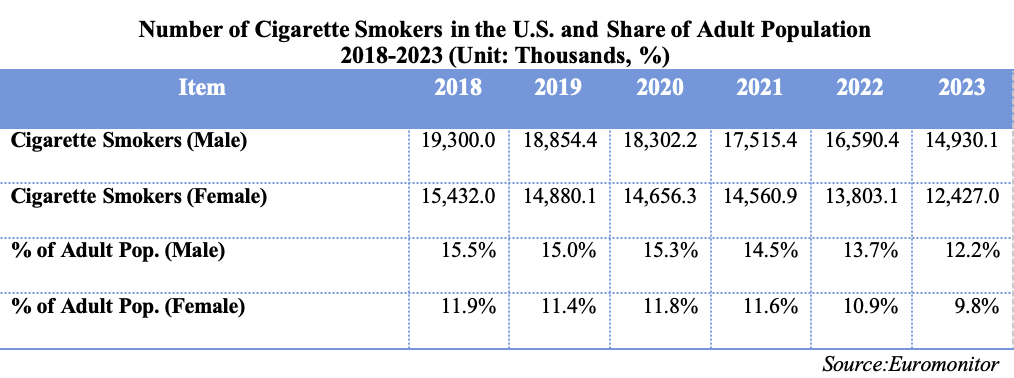
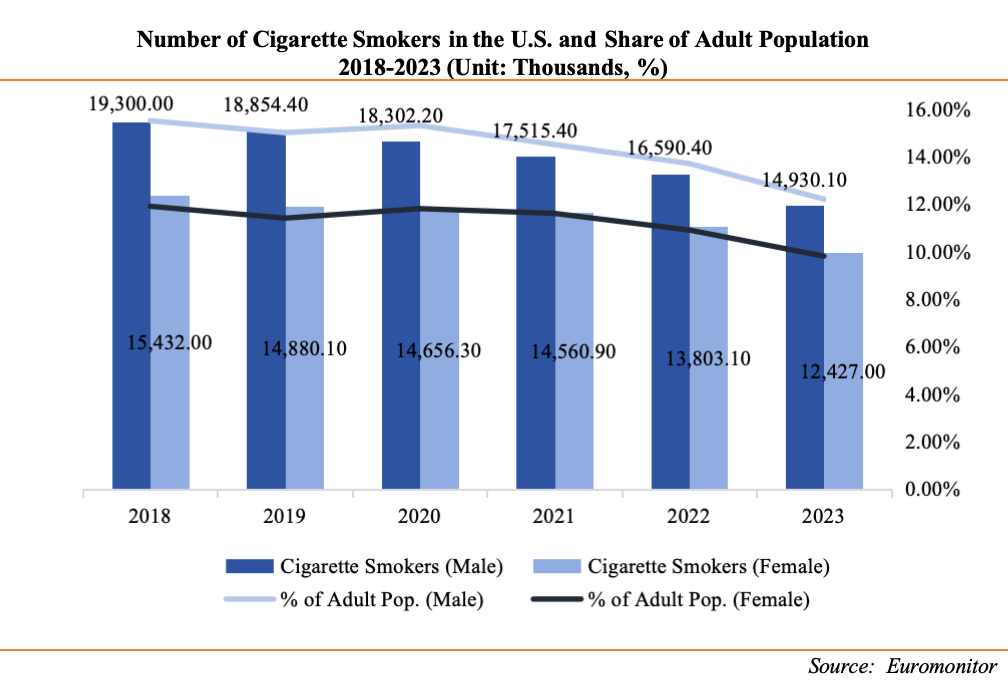
According to Euromonitor data, in 2023, there were approximately 14.93 million male cigarette smokers in the U.S., accounting for 12.2% of the adult male population. Female smokers numbered over 12.43 million, representing 9.8% of the adult female population. Overall, the smoker population in the U.S. has shown a year-on-year decreasing trend.
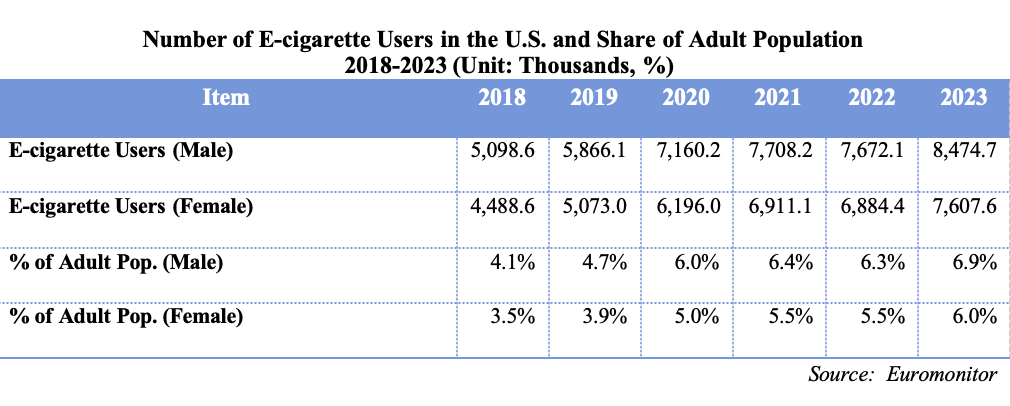
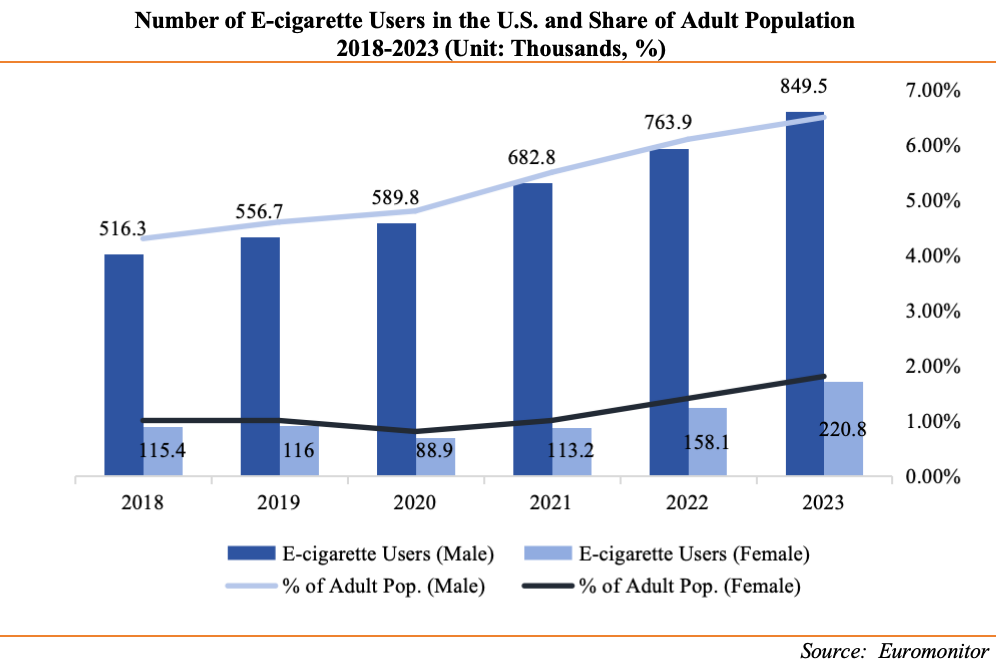
Regarding e-cigarette users, according to Euromonitor data, in 2023, there were approximately 8.47 million male e-cigarette users in the U.S., accounting for 6.9% of the adult male population. Female e-cigarette users numbered 7.61 million, representing 6.0% of the adult female population. Overall, the number of e-cigarette users in the U.S. has shown a year-on-year increasing trend, indicating significant market potential.
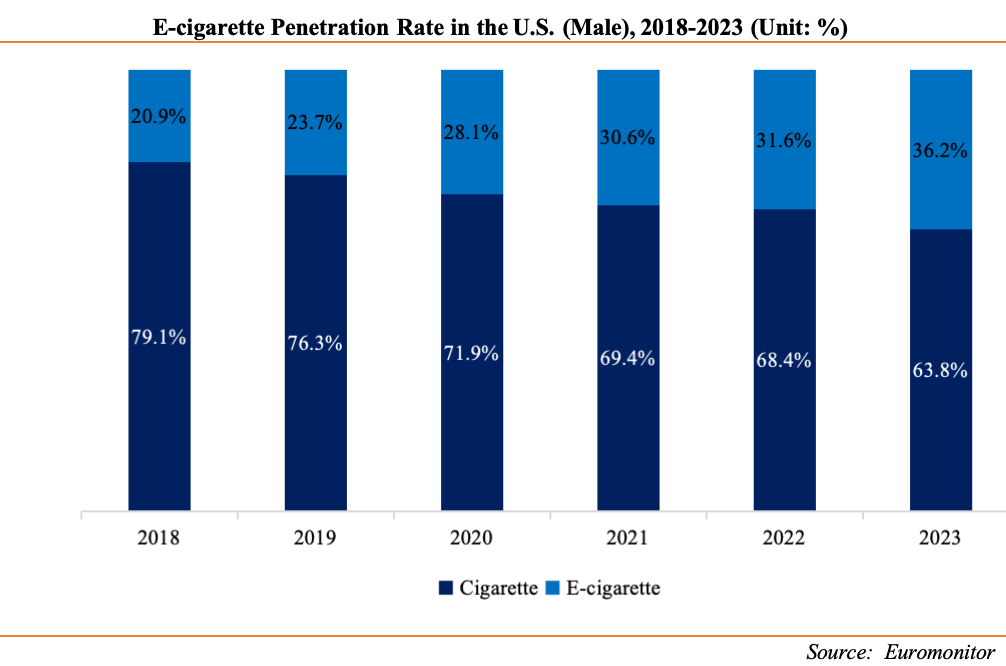
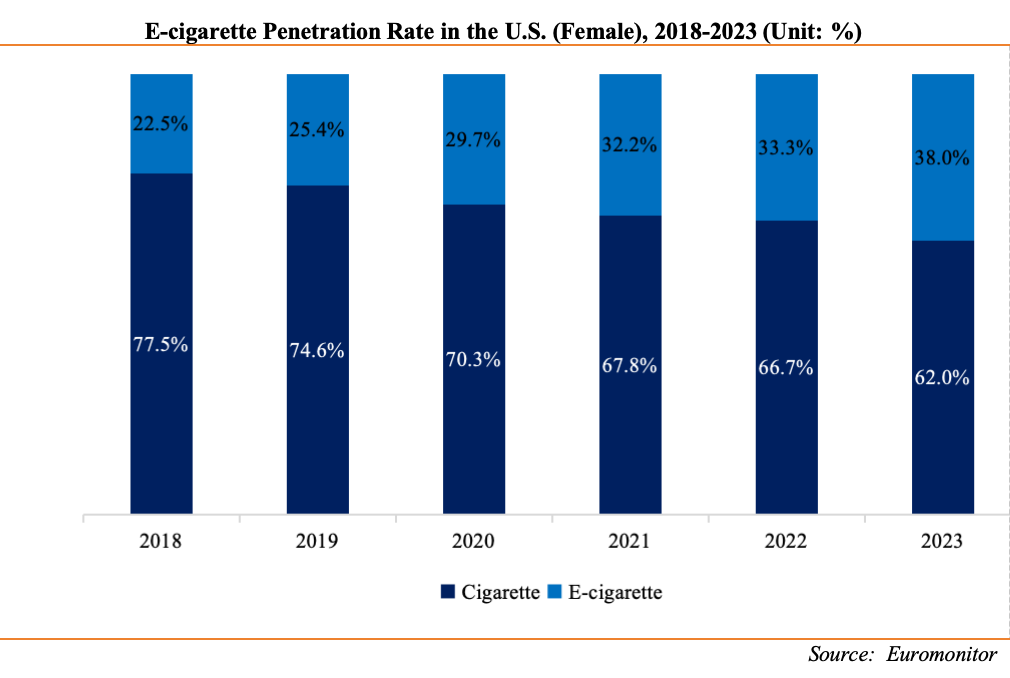
From 2018 to 2023, the proportion of e-cigarette users among the total smoker population in the U.S. ranged from 20% to 40% for both genders, with an increasing trend in recent years. In 2023, male e-cigarette users accounted for 36.2% of the male smoker population. In the female market, female e-cigarette users represented 38.0% of the female smoker population. Overall, the e-cigarette penetration rate is similar between the male and female markets in the U.S.
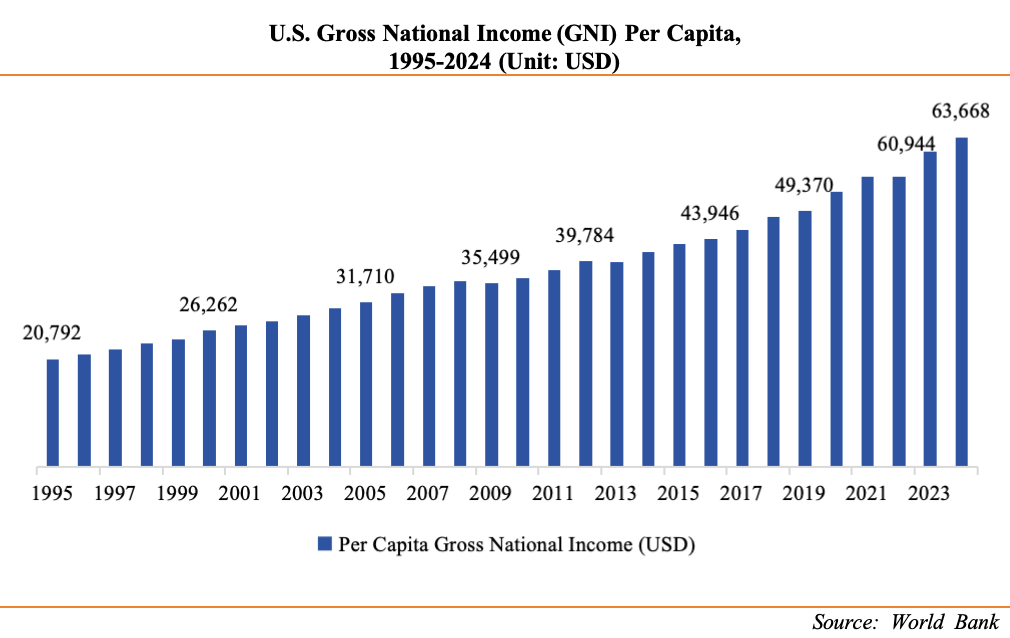
According to World Bank data, the U.S. Gross National Income (GNI) per capita has increased rapidly from 1995 to 2024. In 2023, GNI per capita was USD 60,944, a year-on-year increase of 8.70%. In 2024, it reached USD 63,668, a year-on-year increase of 4.47%. This rapid growth in national income provides substantial purchasing power for disposable e-cigarettes in the U.S. Coupled with the large existing cigarette smoker base, the disposable e-cigarette market demonstrates significant future potential.