1. Policy and Regulations for Disposable E-cigarettes in Malaysia
The Ministry of Health is the primary regulatory authority for novel tobacco products in Malaysia. The main regulatory framework for conventional tobacco is the Control of Tobacco Product Regulations of 2004, which has undergone 12 amendments to date, primarily addressing traditional tobacco products. Furthermore, on March 31, 2023, Malaysia's National Pharmaceutical Regulatory Agency announced amendments to the Poisons Act 1952. The key change was the exemption of nicotine used in tobacco and e-liquids (previously classified as a Class C poison under the Act and prohibited), thereby legalizing the use of nicotine in e-liquids and, by extension, the use of e-cigarettes in Malaysia.
On September 24, 2024, the Ministry of Health announced that the Smoking Products Control Act for Public Health 2024 (Act 852) would take effect on October 1, 2024. In its communications with the industry regarding the forthcoming regulations, the Ministry also set caps on e-liquid capacity: the liquid volume per pod, cartridge, or disposable e-cigarette must not exceed 3 mL, and bottled e-liquid must not exceed 15 mL.
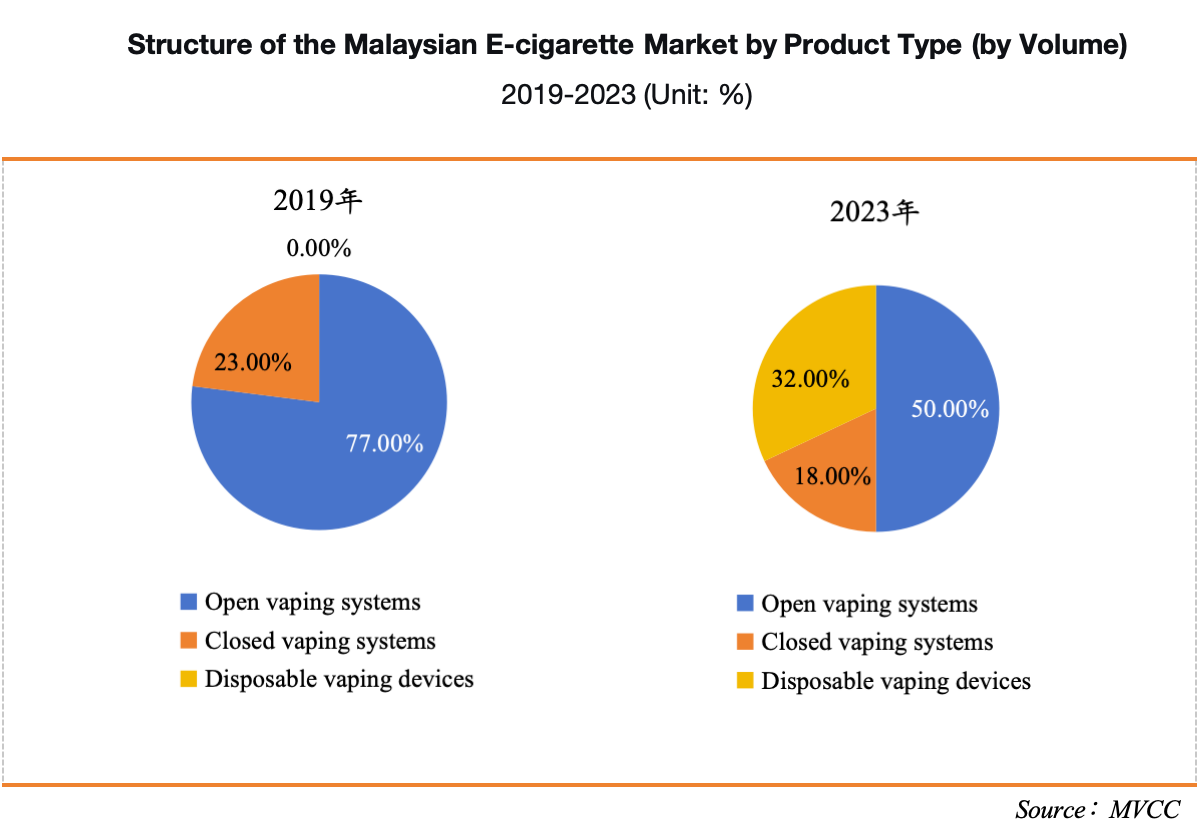
According to the 2023 Malaysian Vape Industry Study released by the Malaysian Vape Chamber of Commerce (MVCC), the proportion of users of open-system and closed-system e-cigarettes declined from 77% and 23% in 2019 to 50% and 18% in 2023, respectively. Meanwhile, disposable e-cigarettes rapidly captured a 32% market share.
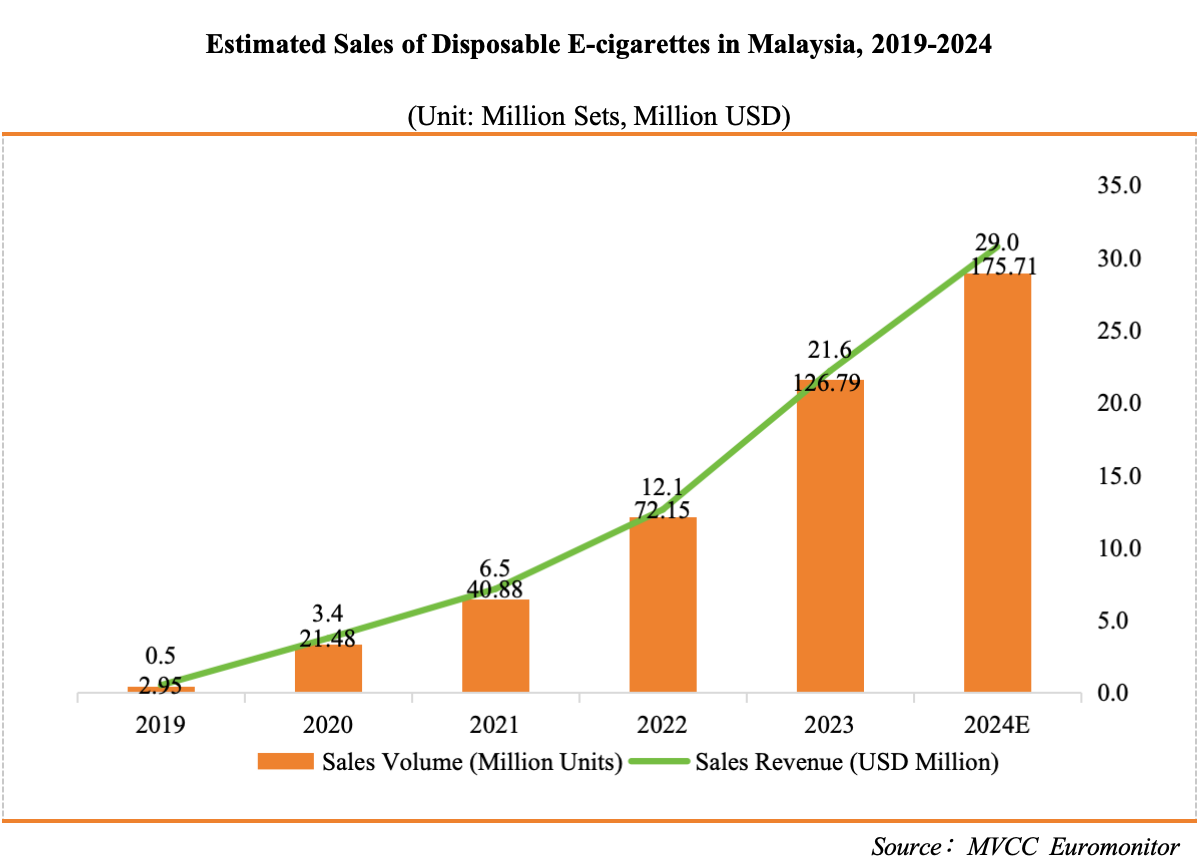
Based on calculations from the 2023 Malaysian Vape Industry Study, the sales volume of disposable e-cigarettes in Malaysia reached approximately 21.6 million sets in 2023, with sales revenue of about USD 127 million. In 2024, the sales volume is estimated to be around 29 million sets, with sales revenue projected at approximately USD 176 million.
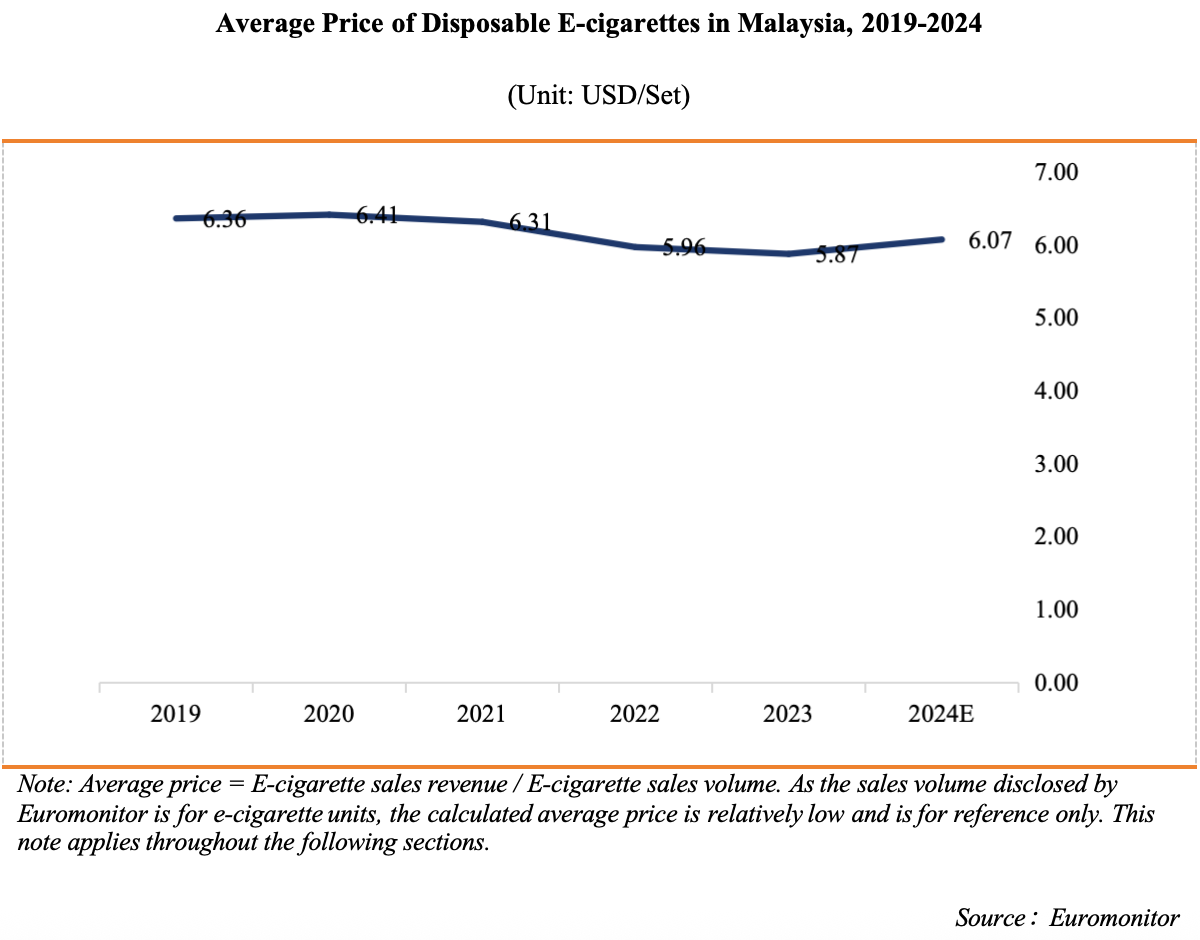
According to Euromonitor data, the average price of disposable e-cigarette products in Malaysia showed a fluctuating downward trend from 2019 to 2023. The average price was USD 6.36 per set in 2019, declining to USD 5.87 per set by 2023, and is estimated to be around USD 6.07 per set in 2024.
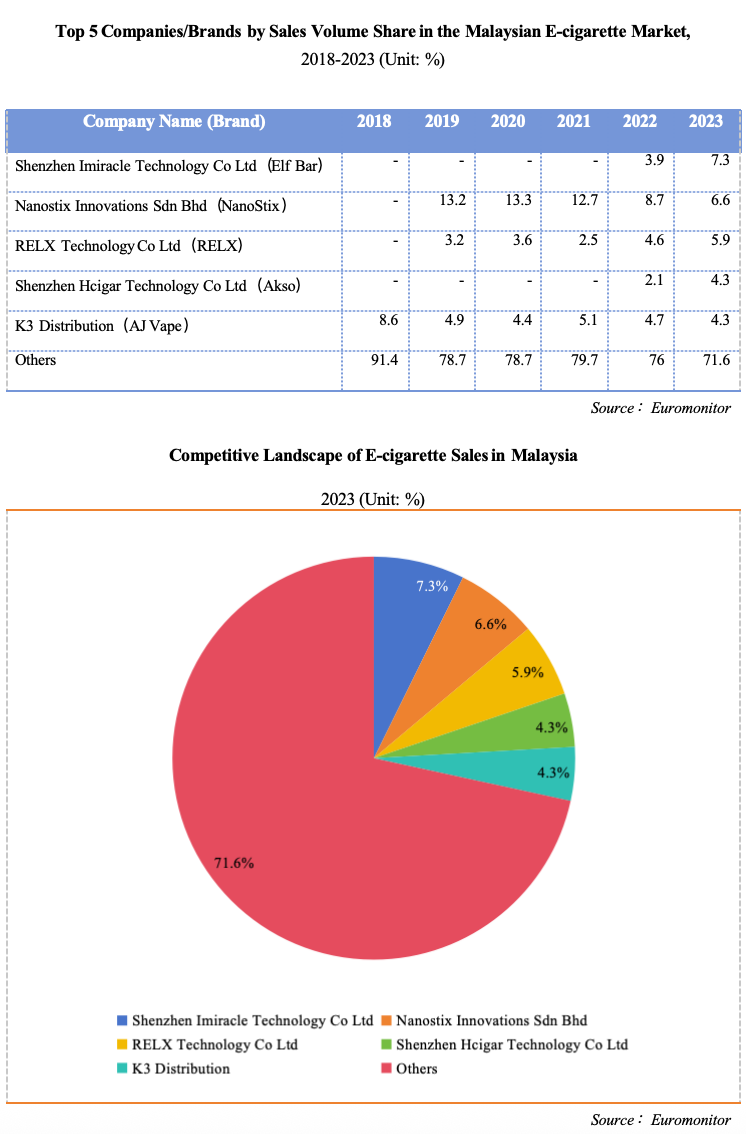
In 2023, Shenzhen Imiracle Technology Co Ltd (Elf Bar) ranked first in the Malaysian e-cigarette market with a 7.3% market share, followed by Nanostix Innovations Sdn Bhd (NanoStix) with 6.6%, and RELX Technology Co Ltd (RELX) with 5.9%. The market shares of other companies/brands were each below 5%. Overall, the concentration of the Malaysian e-cigarette market is relatively low.
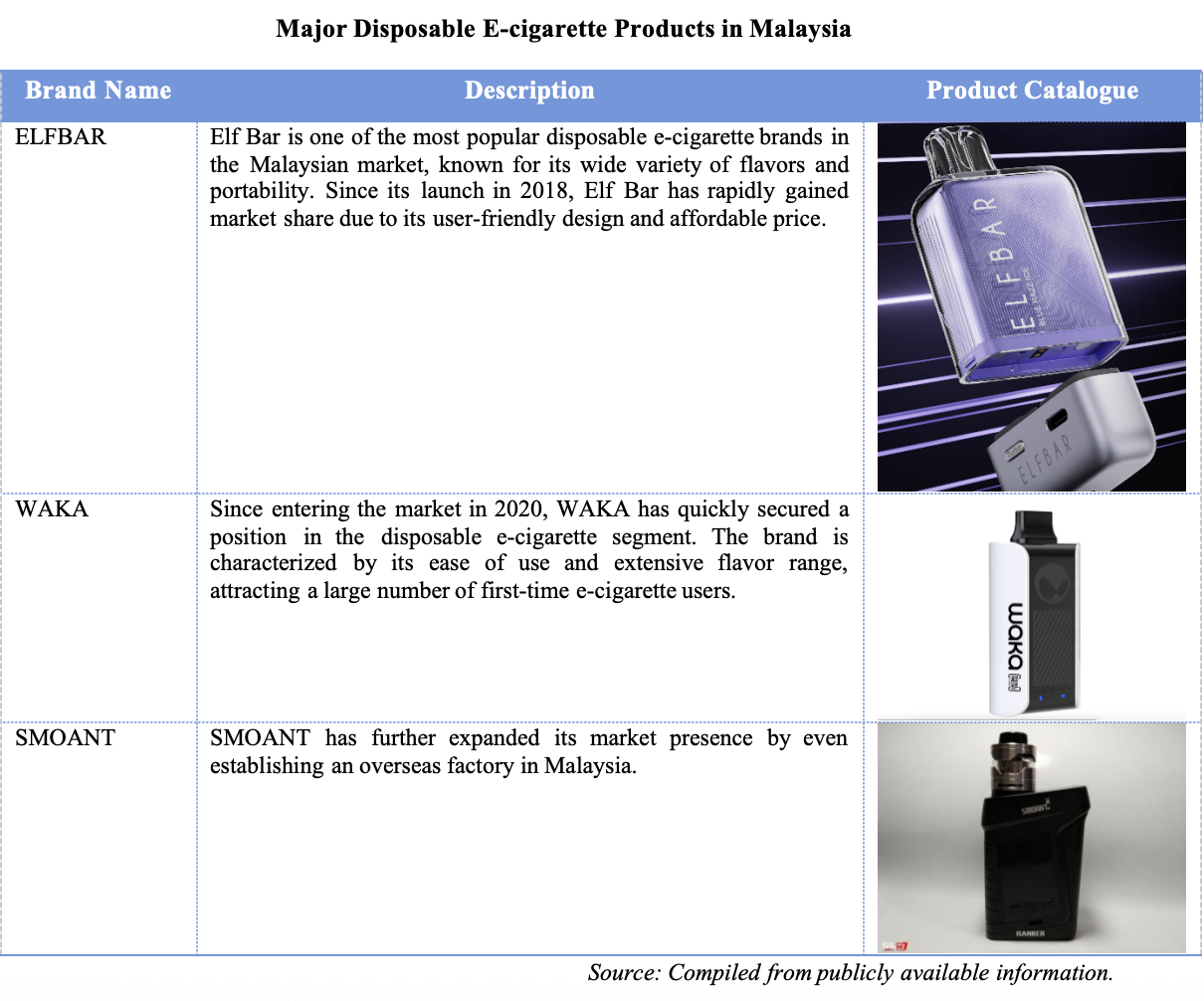
In the Malaysian disposable e-cigarette market, leading brands such as Elf Bar and WAKA have attracted a large number of consumers with their portability and affordability, becoming significant components of the market.
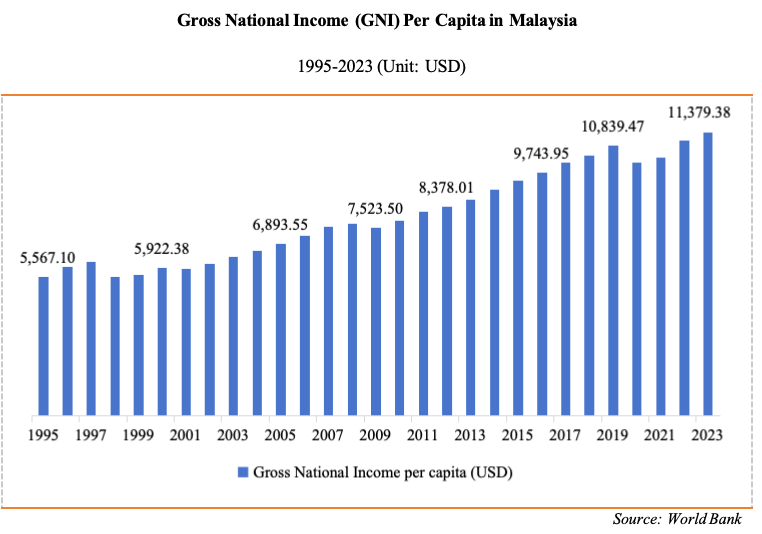
According to World Bank data, Malaysia's Gross National Income (GNI) per capita has fluctuated but generally increased from 1995 to 2023. In 2023, the GNI per capita was USD 11,379.38, a year-on-year increase of 2.92%. The growth in national income provides sufficient purchasing power for disposable e-cigarettes in Malaysia, indicating favorable market potential for the future.