1. New Zealand Pod System E-Cigarette Regulation
1.1、New Zealand E-Cigarette Legal Framework
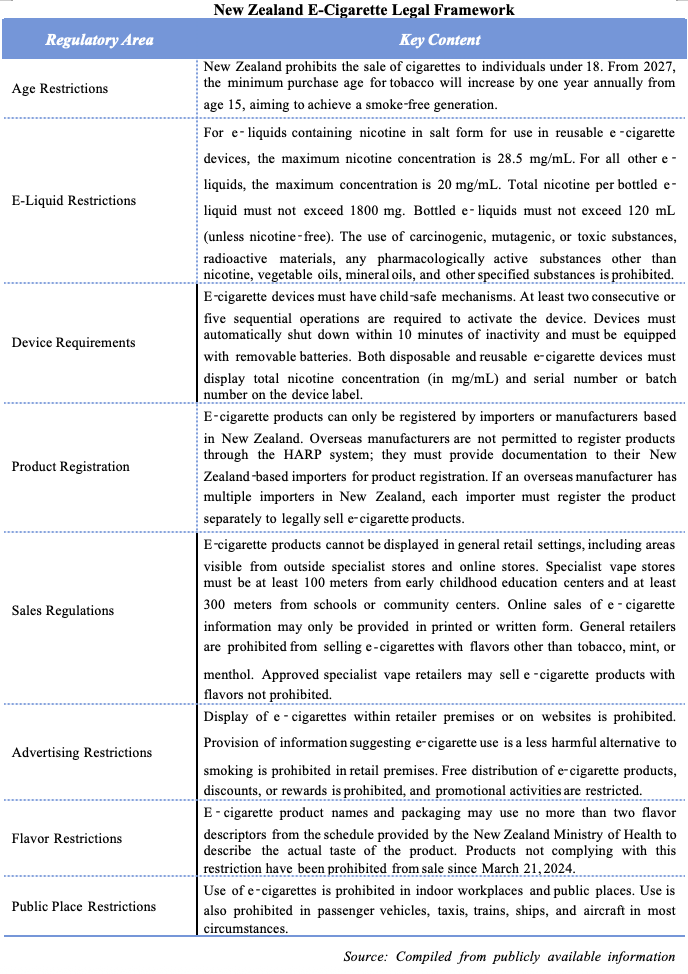
The development of e-cigarette regulations in New Zealand has followed a relatively systematic and comprehensive path. In 2017, the New Zealand government established a technical expert advisory group on e-cigarettes. In 2018, the Cabinet agreed to a series of proposals on e-cigarettes and tobacco products. In 2019, the government launched the "Vaping Facts" website to provide information and education to the public. In 2020, the Smoke‑free Environments and Regulated Products (Vaping) Amendment Act came into effect. In 2021, the Smoke‑free Environments and Regulated Products Regulations took effect, prohibiting general retailers from selling e-cigarettes or smokeless tobacco products with flavors other than tobacco, mint, or menthol, while also setting specific nicotine concentration limits for products sold in New Zealand. In 2022, New Zealand established the Vaping Regulatory Authority (VRA) to oversee e-cigarette products and manage applications from specialist vape retailers. Unregistered e-cigarette products are prohibited from sale in New Zealand.
1.2、New Zealand E-Cigarette Tax Policy
As a global pioneer in smoking cessation, New Zealand has actively encouraged smokers to switch to e‑cigarettes since 2018. The government has adopted a flexible approach to e‑cigarette taxation, indirectly promoting e‑cigarette use through increased tobacco taxes rather than imposing new taxes directly on e‑cigarettes. In 2024, New Zealand halved the excise tax on heated tobacco products for a one‑year trial period, aiming to encourage smokers to switch to relatively lower‑risk nicotine products such as e‑cigarettes.
2. Current Status of the New Zealand E‑Cigarette Market
2.1、New Zealand E‑Cigarette Market Sales Scale
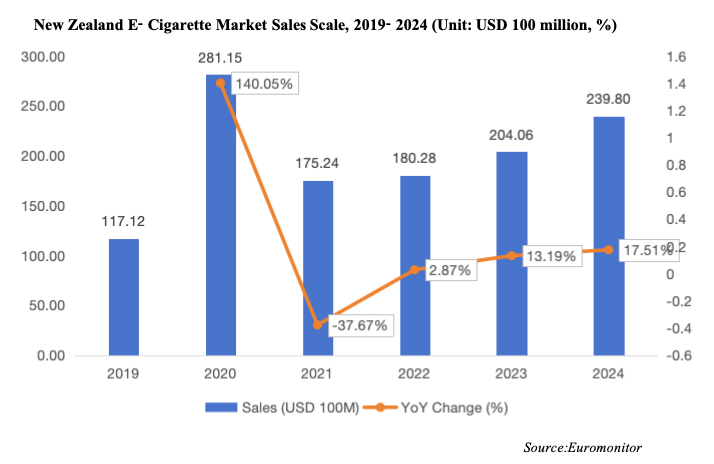
From 2019 to 2024, the New Zealand e‑cigarette market grew year by year. In 2020‑2021, the market achieved rapid growth driven by regulatory breakthroughs and the "Vape‑to‑Quit" program. In 2022, growth slowed significantly due to the impact of excise tax on disposable e‑cigarettes and channel saturation. From 2023, the market recovered as the government included pod‑based e‑cigarettes in the smoking cessation program. Overall, the New Zealand e‑cigarette market has experienced peaks and adjustments driven by policy, ultimately trending toward steady growth.
2.2、New Zealand E‑Cigarette Market Segment Structure
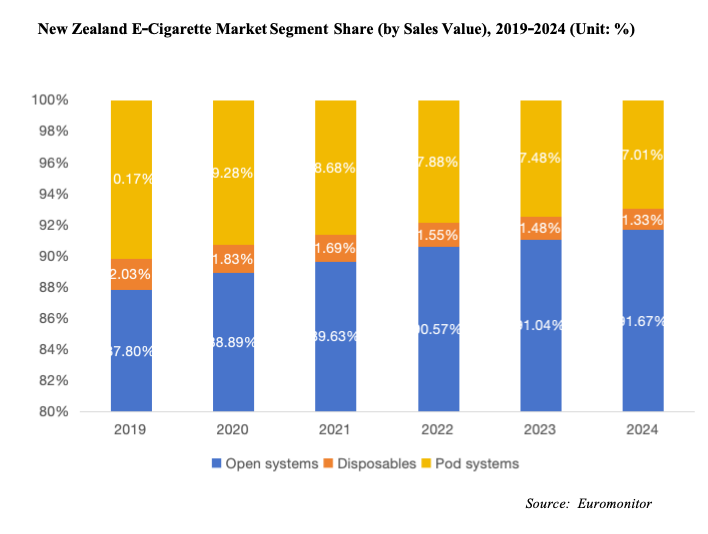
From 2019 to 2024, the New Zealand e‑cigarette market structure showed open systems continuously expanding their dominant position with policy support, user preferences, and tax advantages, growing from 87.8% to 91.7% — becoming almost the only mainstream choice. Closed systems account for a relatively small share. New Zealand vapers prefer high‑vapor‑output flavors, and the power adjustability (200W+) and refillable flexibility of open systems create an experience barrier. Disposable products have been nearly marginalized under high taxes and youth protection policies. Overall, the New Zealand e‑cigarette market remains dominated by open systems.
3. New Zealand Pod System E‑Cigarette Sales Value
3.1、New Zealand Pod System E‑Cigarette Overall Sales Value
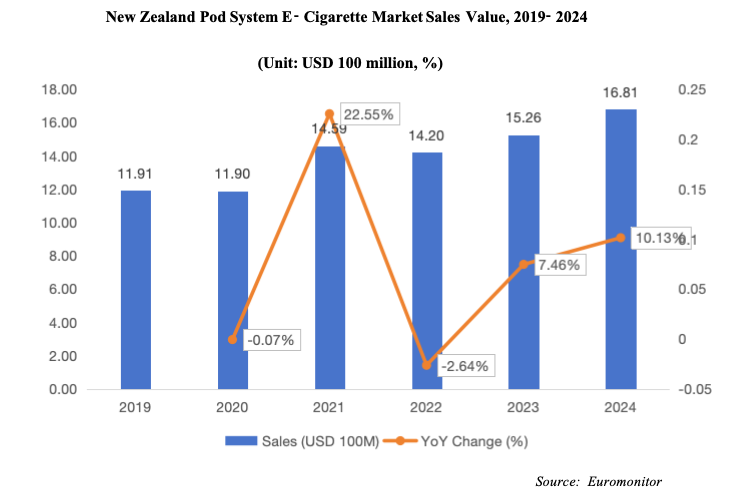
From 2019 to 2024, the New Zealand pod system e‑cigarette market remained relatively small, with slow growth amid fluctuations. Initially constrained by policy gaps and open‑system dominance, the market remained largely stagnant. In 2021, policy driven short‑term growth was achieved, but was followed by a pullback due to high excise taxes creating price disadvantages. From 2023, as the government included pod systems in the upgraded smoking cessation program and optimized flavor regulations, the market gradually recovered. Overall, this category is slowly expanding under policy support and medical‑pathway guidance, but remains constrained by taxes and user habits.
3.2、New Zealand Pod System E‑Cigarette Segment Structure
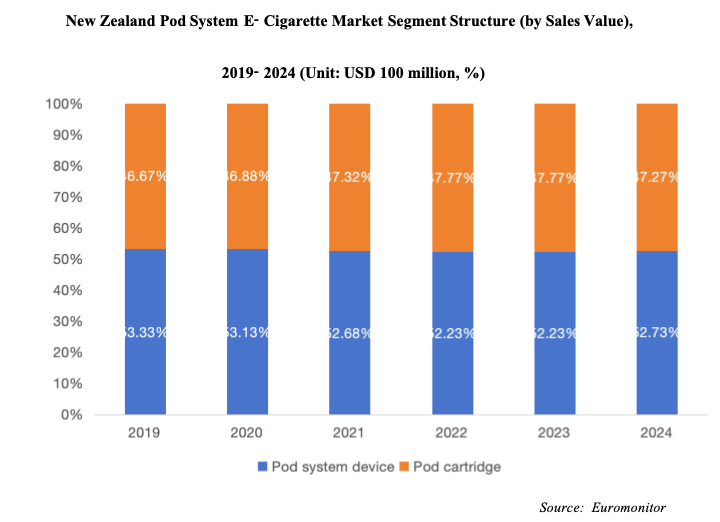
From 2019 to 2024, in the New Zealand pod system e‑cigarette market segment, device sales slightly exceeded pod sales, but overall changes were modest. The slight dominance of devices is primarily influenced by the government's "Vape‑to‑Quit" program, while pod market share has failed to grow effectively due to the dual pressures of excise tax and insufficient technical trust.
4. New Zealand Pod System E‑Cigarette Sales Volume
4.1. Device Sales Volume
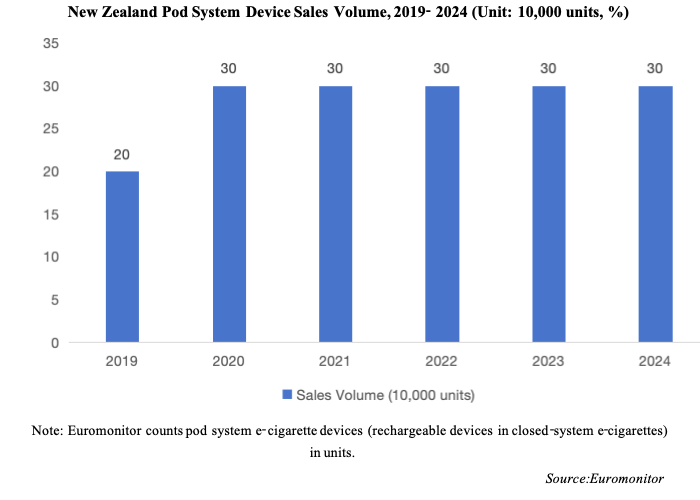
From 2019 to 2024, New Zealand pod system device sales volumes remained stable at approximately 300,000 units per year.
4.2. Pod Sales Volume
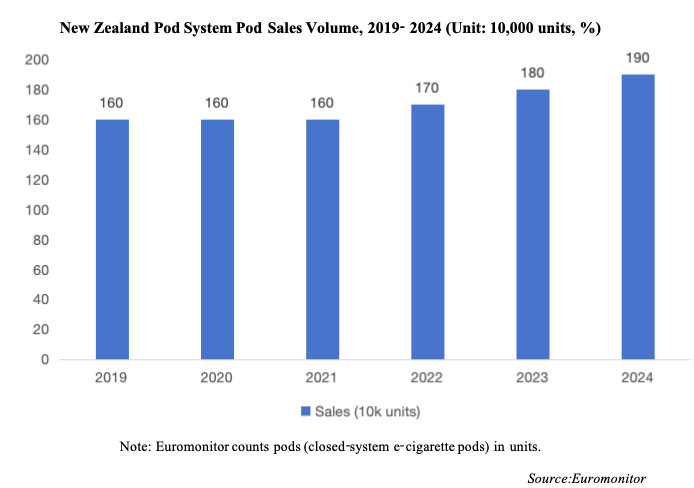
From 2019 to 2024, New Zealand pod sales volumes showed a year‑on‑year growth trend, increasing from 1.6 million units to 1.9 million units.
5. New Zealand Pod System E‑Cigarette Representative Brand Landscape
In the New Zealand pod system market, brands such as VUSE, ALT., and SOLO are prominent. VUSE demonstrates strong competitiveness with its advanced technology and omnichannel coverage. In 2018, VAPO partnered with FEELM to launch the ALT. closed‑system e‑cigarette. Within less than four years, ALT. successfully became the leading brand in the New Zealand closed‑system e‑cigarette market, ranking first in market share.