The upstream segment of disposable e-cigarettes consists primarily of raw material suppliers that provide core components such as e-liquids, atomizers, and chips, as well as auxiliary materials including lithium batteries aånd flavorings. In addition, it also involves unprocessed materials such as plastics and rubber.
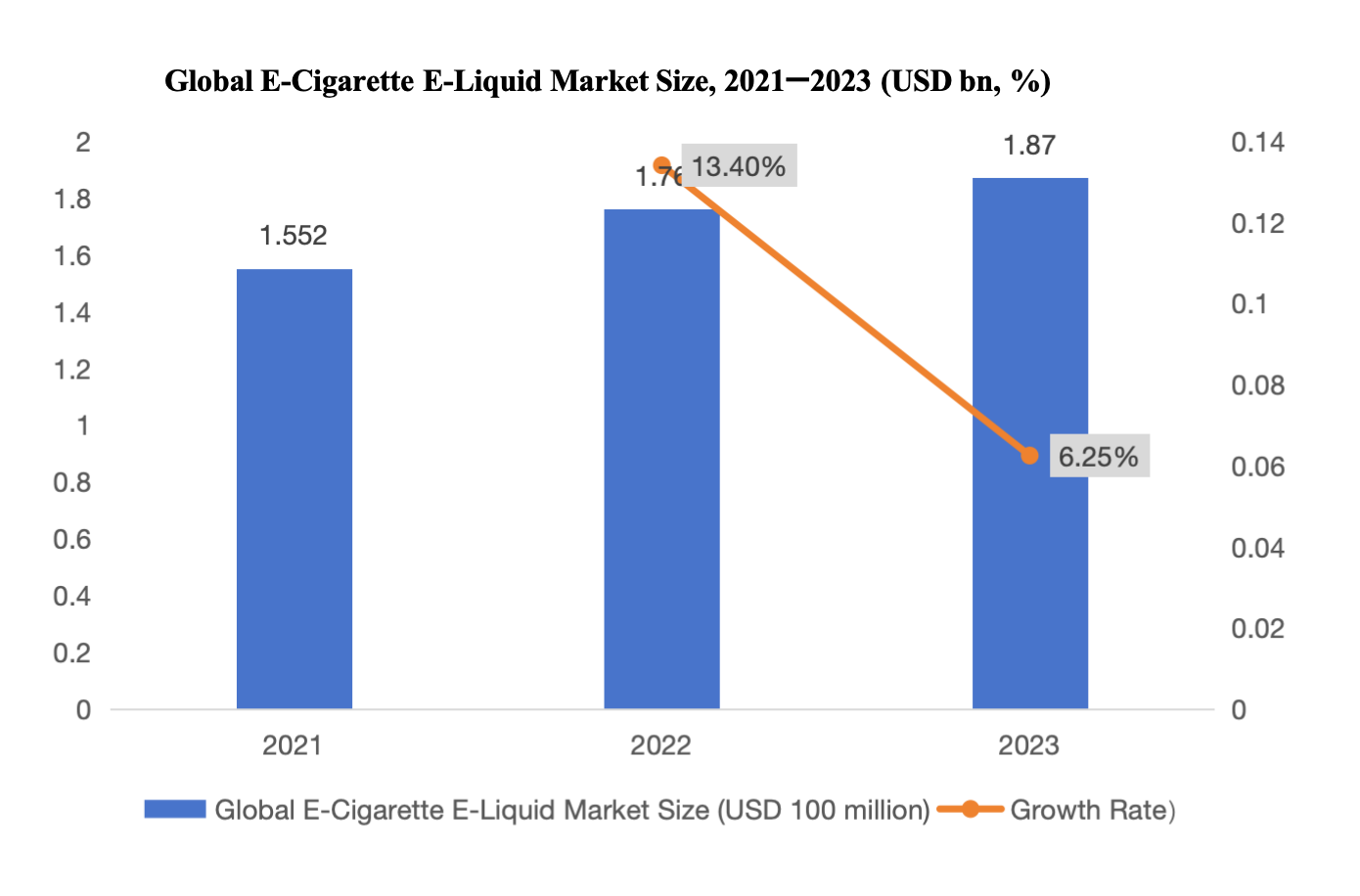
As the global e-cigarette market continues to expand, the supply of e-liquid has also increased accordingly. However, in recent years, stricter regulations on e-liquid flavors have been implemented in certain countries—such as China and the United States, where only tobacco-flavored e-liquids are permitted—slowing the overall growth of the global e-liquid market.
In 2023, the global e-cigarette e-liquid market reached USD 1.87 billion, representing a year-on-year increase of 6.25%.
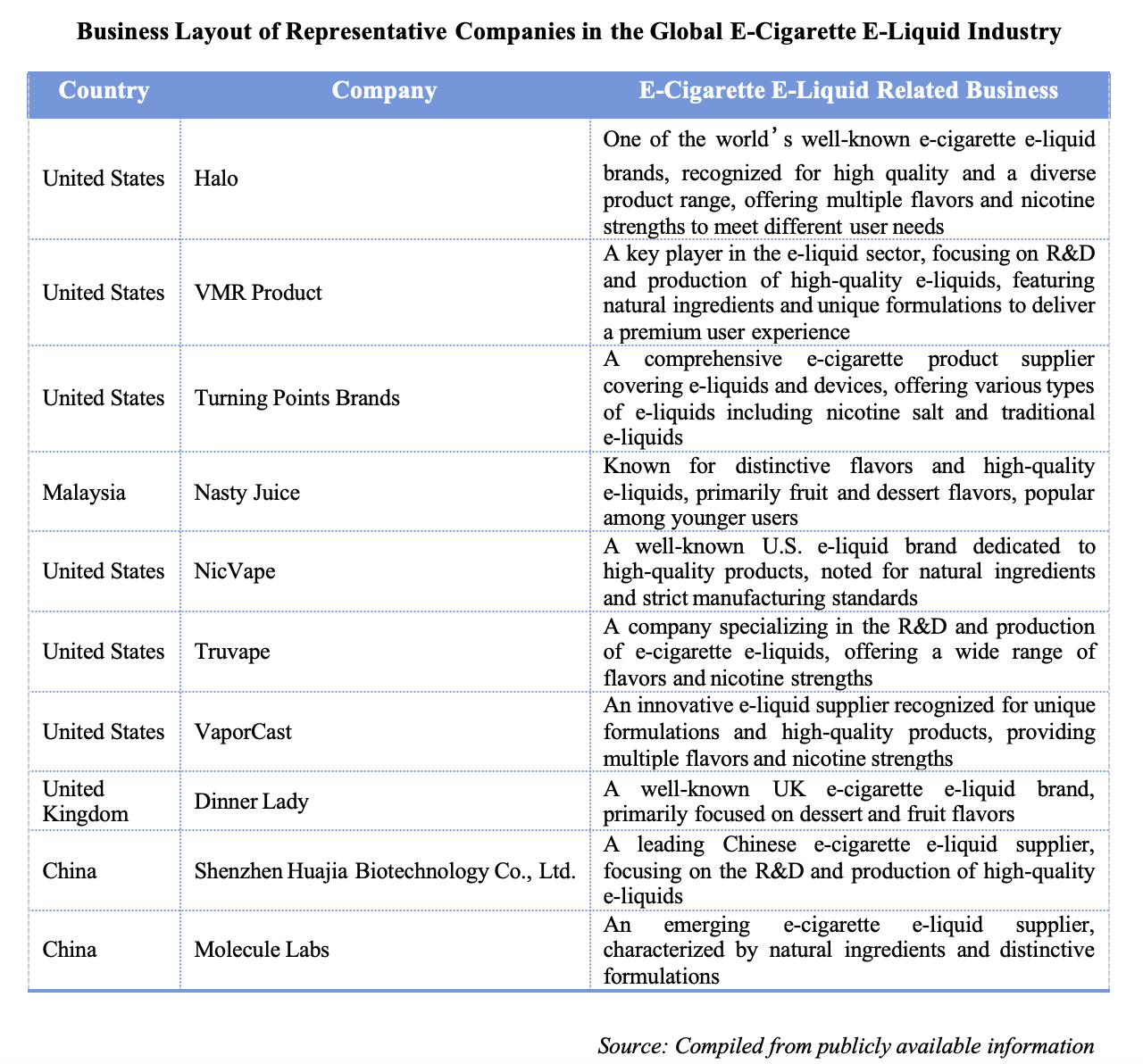
Representative companies in the global e-cigarette e-liquid industry include Halo, VMR Products, Turning Point Brands, and Nasty Juice. These companies hold important positions in the global e-liquid market and have driven the development of the e-cigarette industry through high-quality products and extensive market reach.
The atomizer is a key component of e-cigarettes, serving as the carrier of e-liquid. It represents an upgraded and improved version of the “cartridge” used in early-generation e-cigarettes. Supported by the e-cigarette power output device, the atomizer heats and aerosolizes the e-liquid to generate vapor.
(1)Classification of Atomizers
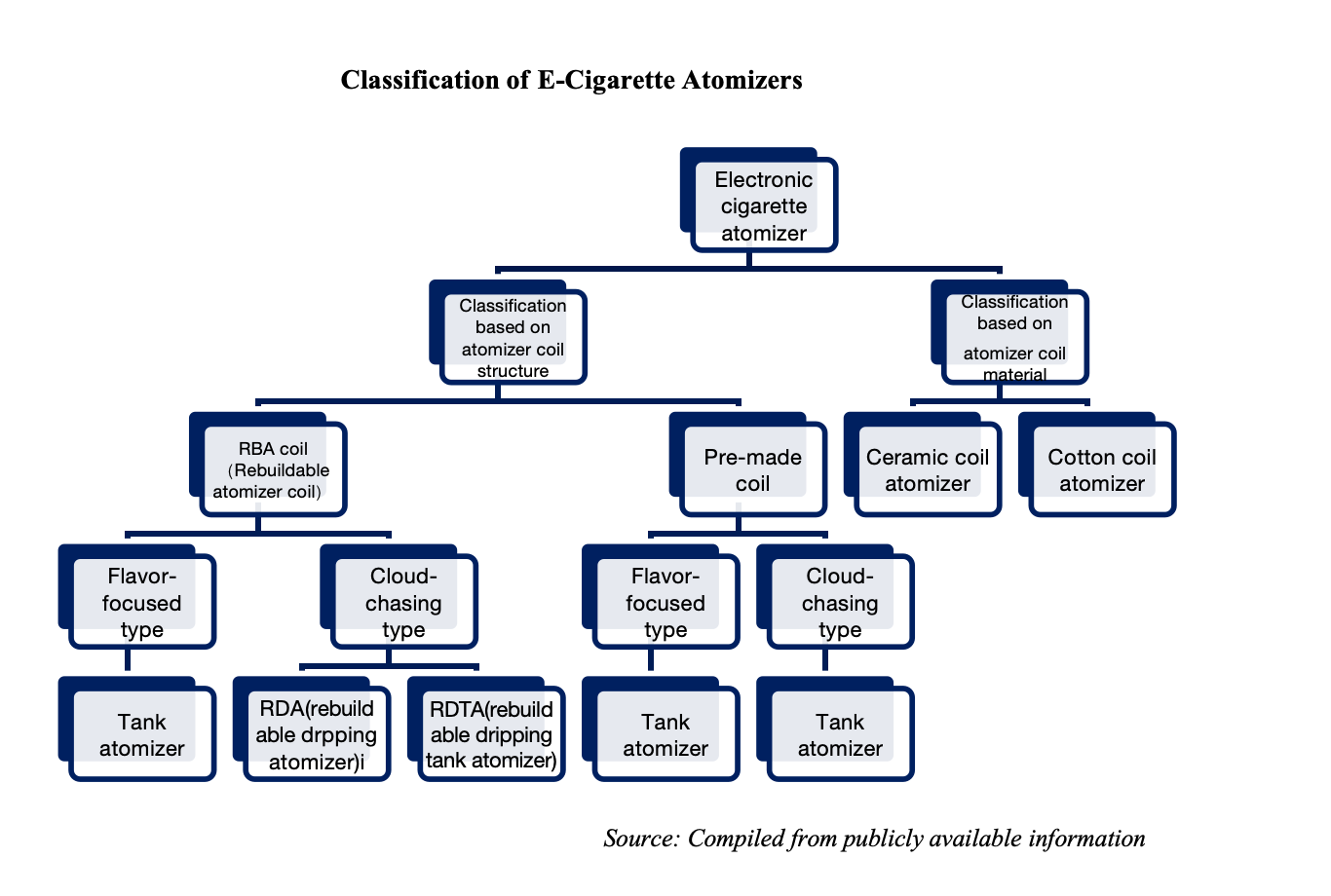
Within the overall structure of an e-cigarette, the atomizer can be considered the core component, as almost all other parts serve its function. Atomizers are classified based on the structure of their coils into two main types: those with pre-made coils and those with RBA (Rebuildable Atomizer) coils for self-building. Furthermore, according to the material of the coil inside the atomizer, e-cigarette atomizers can be divided into ceramic coil atomizers and cotton coil atomizers.
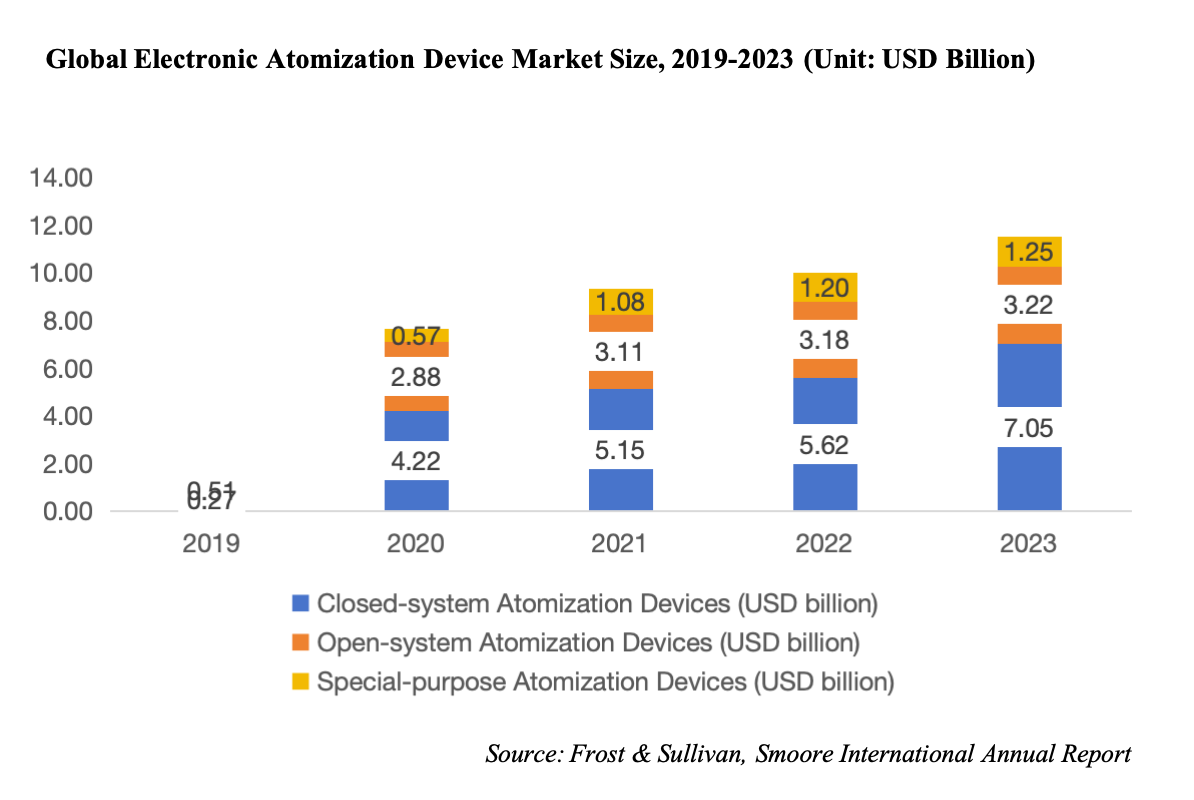
In 2023, the global market size for electronic atomization devices reached approximately USD 11.511 billion, representing a year-on-year increase of 15.12%, with a CAGR of 14.48% from 2019 to 2023. Among these, the market size for closed-system atomization devices was about USD 7.048 billion, accounting for 61.23% of the total; the market size for open-system atomization devices was about USD 3.217 billion, accounting for 27.94%; and the market size for special-purpose atomization devices was about USD 1.246 billion, accounting for 10.83%. Closed-system atomization devices dominate the global electronic atomization device market and have shown relatively rapid growth, with a year-on-year increase of 25.50% in 2023 compared to 2022.
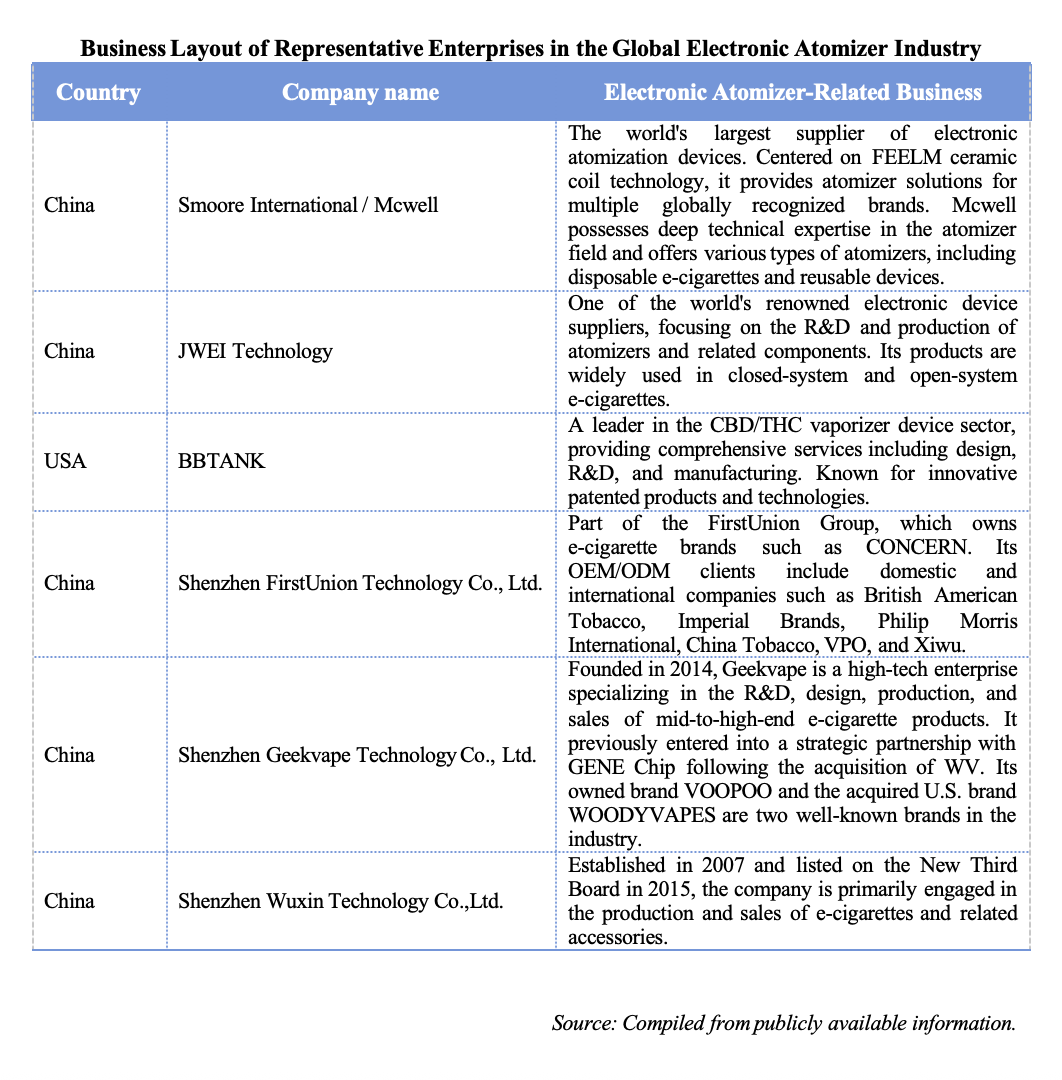
Smoore International is the world's largest manufacturer of electronic atomization devices. With its core FEELM ceramic coil technology, it provides atomizer solutions for many well-known global brands. In addition, other globally recognized atomizer suppliers include JWEI Technology and BBTANK, among others. The business layouts of current representative enterprises in the global electronic atomizer industry are as follows.
The battery components currently used in e-cigarette products on the market are primarily lithium batteries. The upstream lithium battery industry chain includes cobalt, manganese, and nickel ores, lithium ores, and graphite ores. Within the lithium battery manufacturing chain, the core component of a battery pack is the cell. After cell encapsulation, integrated wiring harnesses and PVC films form the battery module. Adding wiring harness connectors and a BMS circuit board then completes the power battery product.
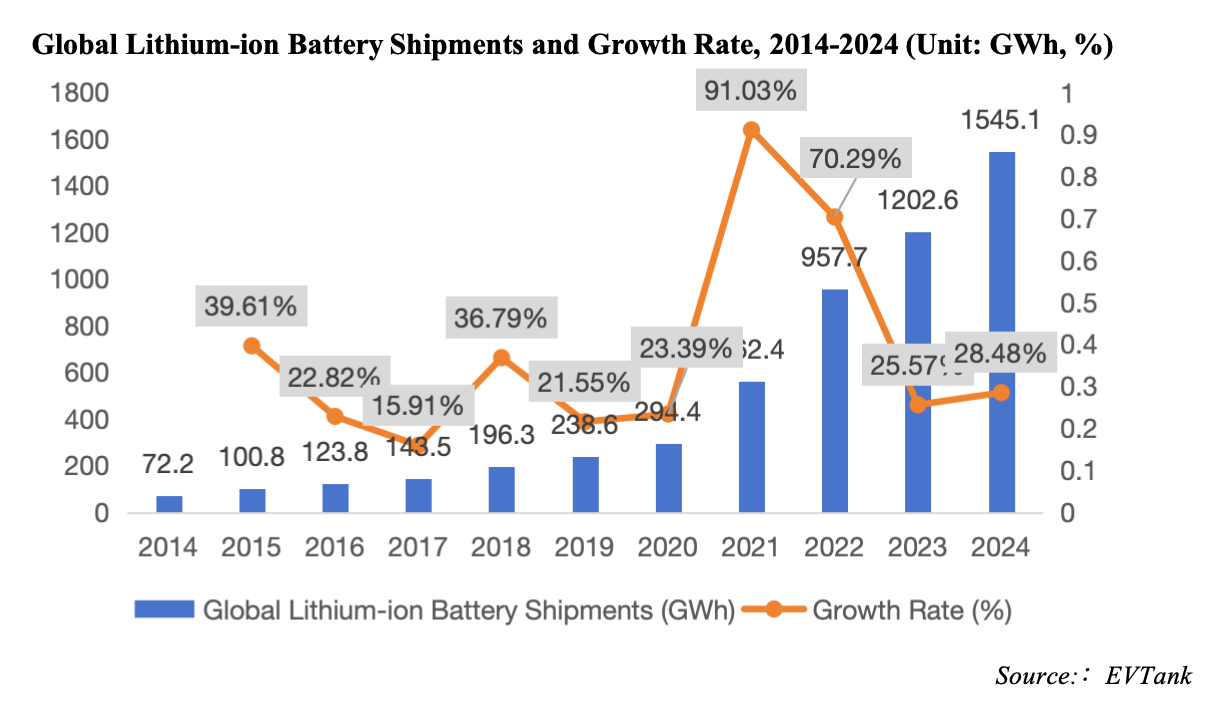
According to EVTank data, global lithium-ion battery shipments grew rapidly from 2014 to 2024. In 2024, global lithium-ion battery shipments reached 1,545.1 GWh, exceeding 1,500 GWh for the first time, representing a year-on-year increase of 28.48%. The rapid growth in lithium-ion battery shipments indicates a favorable supply situation for electronic components.
(2)Major Suppliers in the Global Lithium-ion Battery Market
In terms of shape and casing rigidity, e-cigarette batteries are categorized into pouch and hard case, cylindrical and prismatic. Combinations include cylindrical pouch cells, prismatic pouch cells, cylindrical steel-cased cells, etc. Early high-power devices commonly used cylindrical hard-case batteries, with well-known models such as 18650. Nowadays, e-cigarettes primarily use pouch batteries. Whether prismatic or cylindrical depends on the product design. They offer multiple advantages, including high safety, large capacity, ultra-thin and lightweight form factor, strong stability, high-rate discharge capability, and flexible design. Based on the cathode material, e-cigarette batteries are commonly categorized into three types: pure cobalt series, ternary series, and a hybrid series combining both. The mainstream market material is primarily pure cobalt, which offers advantages such as a high discharge voltage plateau, high-rate discharge capability, and high energy density. The voltage plateau for pure cobalt batteries ranges between 3.4–3.9V, while for ternary batteries, it is mainly 3.6–3.7V. They also require a high discharge rate, typically 8–10C. For example, models like 13350 and 13400 need to achieve a continuous discharge capability of 3A.
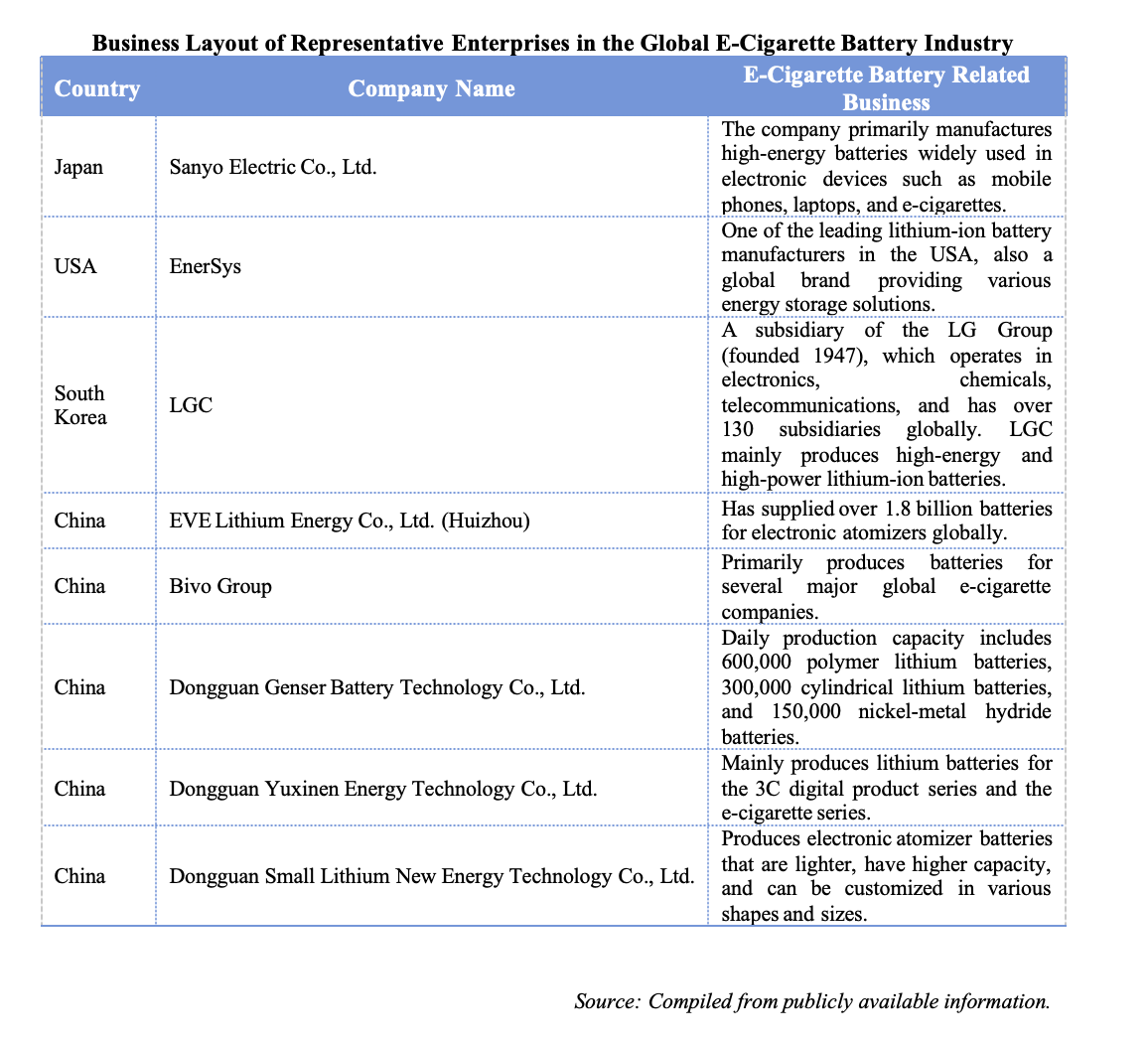
The business layout of current representative enterprises in the global e-cigarette battery industry is as follows:
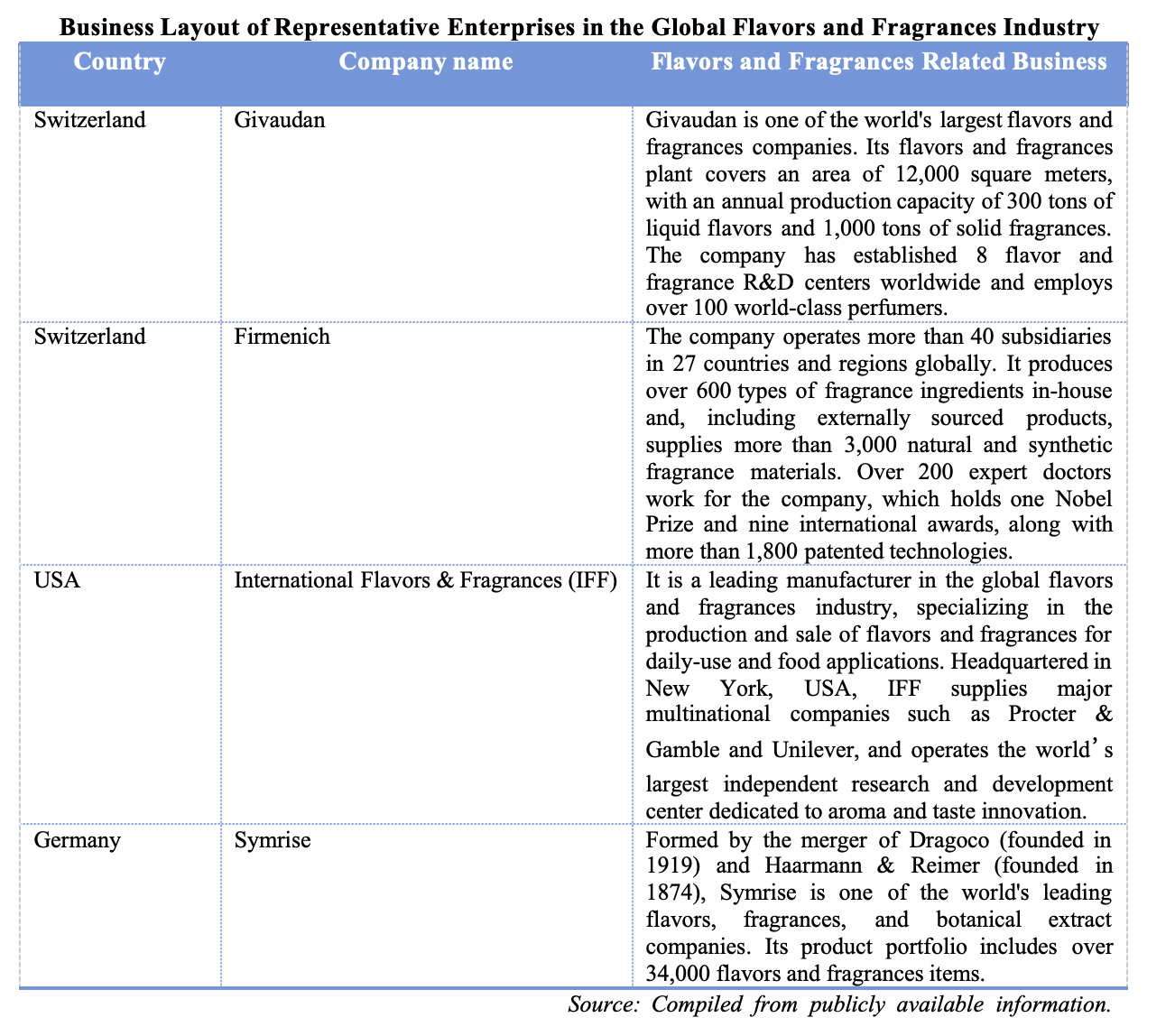
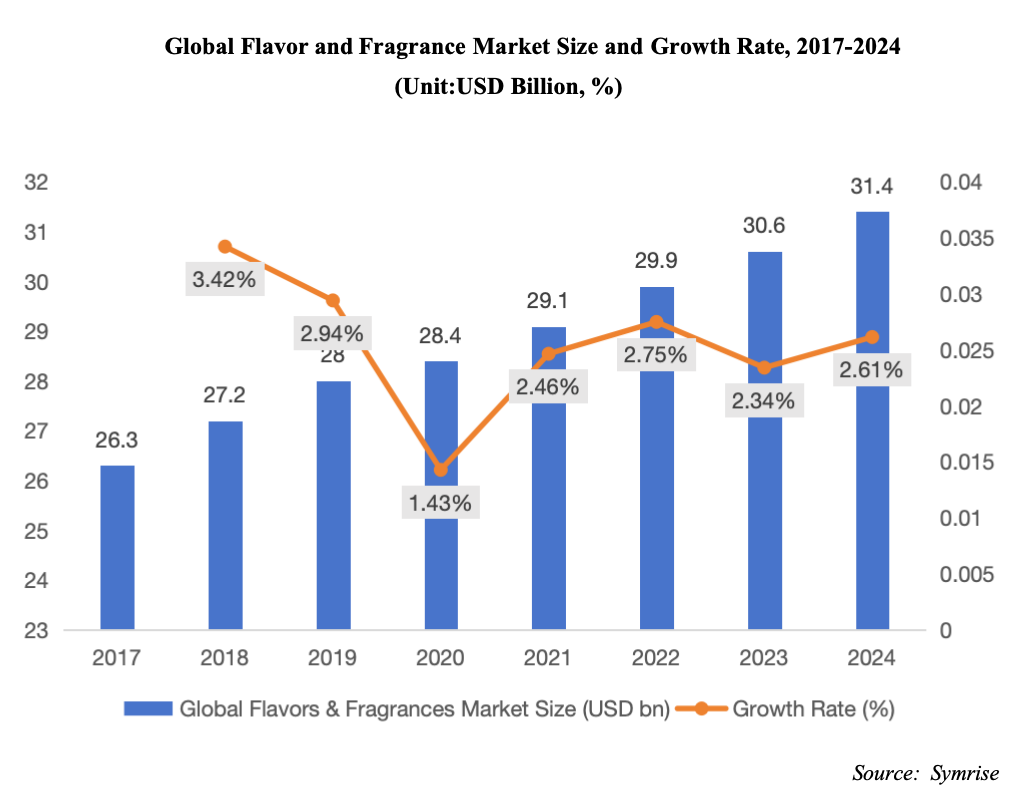
According to data disclosed by Symrise, the global flavor and fragrance market size increased year by year from 2017 to 2023, reaching USD 30.6 billion in 2023, a year-on-year increase of 2.34%. Preliminary statistics indicate the global flavor and fragrance market size for 2024 is USD 31.4 billion, a year-on-year increase of 2.61%.
The global flavors and fragrances market is primarily dominated by four leading companies: Givaudan, Firmenich, International Flavors & Fragrances (IFF), and Symrise. Together, these four companies account for over 60% of the global market share.