1 Disposable E-Cigarette Policies and Regulations in the Middle East
Almost all countries in the Middle East follow Islam. While Islamic teachings prohibit alcohol, most Middle Eastern countries take a relatively lenient approach toward tobacco. Even where laws forbid smoking, the tobacco market remains active. As developed countries introduce smoking cessation targets, the appeal of e-cigarettes in these markets is becoming increasingly evident. This trend is influencing other regions, with the Middle East being a typical example.
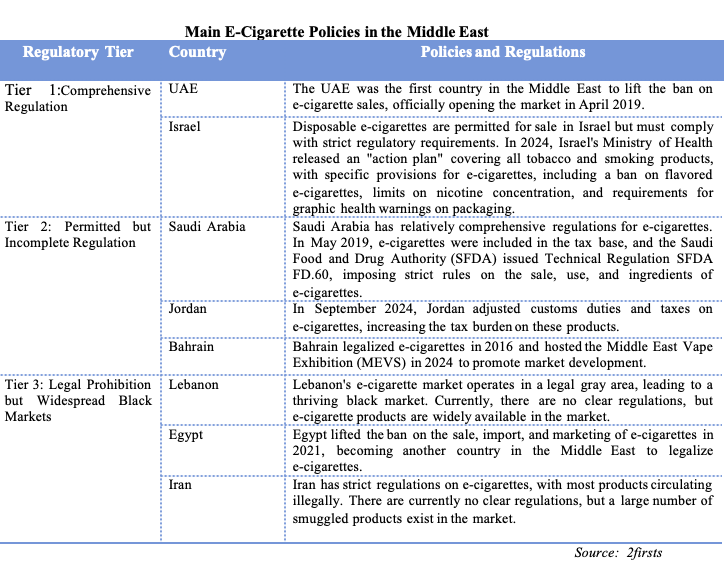
Regulation of e-cigarettes in the Middle East can be broadly categorized into three tiers:
Tier 1: Countries with comprehensive e-cigarette regulations, such as Israel, the UAE, and Saudi Arabia.
Tier 2: Countries where e-cigarettes are permitted but regulations are incomplete, such as Jordan and Bahrain.
Tier 3: Countries where e-cigarettes are legally prohibited, but weak enforcement has led to widespread black markets, such as Egypt, Lebanon, Iran, and Qatar.
2 Size of the Middle East E-Cigarette Market
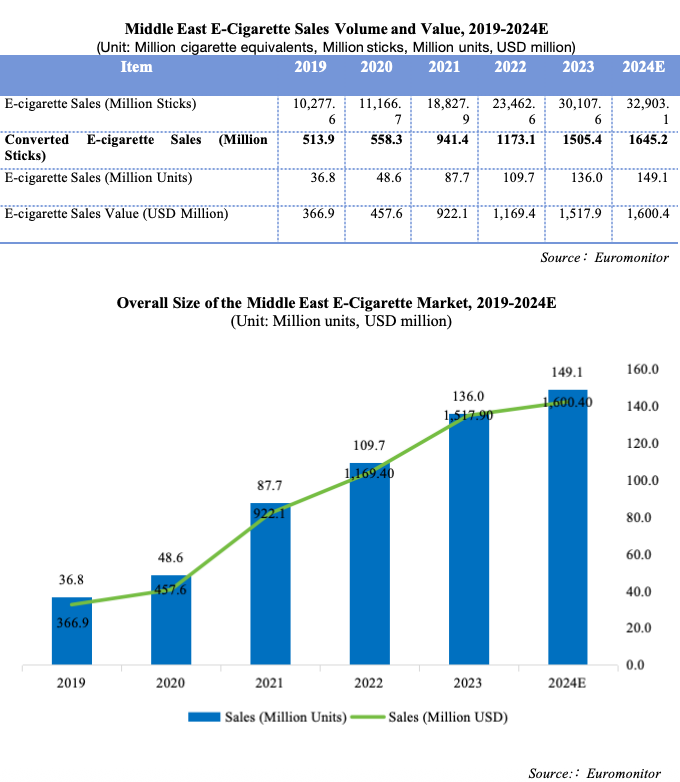
According to Euromonitor data, the Middle East e-cigarette market showed a growth trend from 2019 to 2024. In 2023, sales of e-cigarette products in the Middle East reached 1.505 billion sticks / 136 million units, with a sales value of USD 1.518 billion.
3 Size of the Middle East Disposable E-Cigarette Market
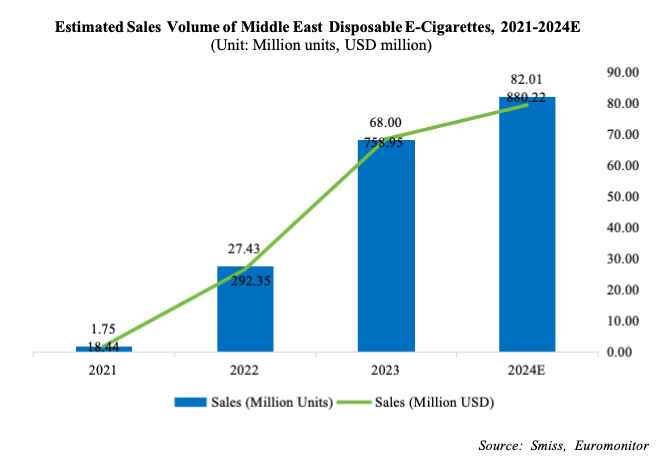
According to a survey conducted by Smiss in the Middle East market, the 2023 Dubai e-cigarette exhibition attracted numerous international brands and distributors, boosting e-cigarette sales in the Middle East and Eastern Europe. The penetration rate of disposable e-cigarettes in the Middle East is gradually increasing. Currently, the e-cigarette market in the Middle East is dominated by high-puff disposable products, with disposable e-cigarettes accounting for nearly 50% of the market share.
Based on the above data, it is estimated that in 2023, disposable e-cigarette sales in the Middle East reached approximately 68 million units, with a sales value of approximately USD 759 million. In 2024, disposable e-cigarette sales are estimated at approximately 82.01 million units, with a sales value of approximately USD 880 million.
4 Average Price of Middle East Disposable E-Cigarettes
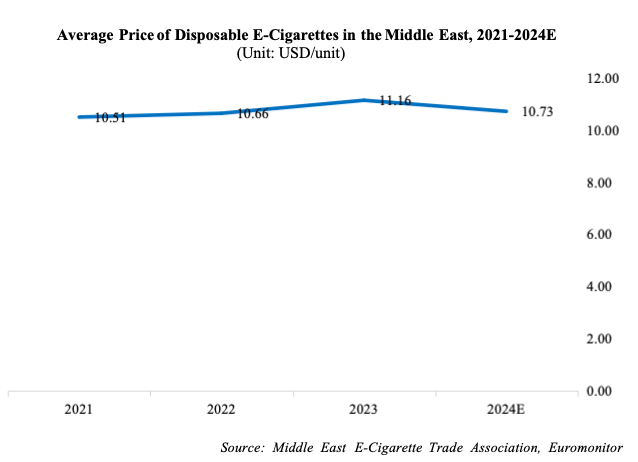
According to data from Euromonitor and the Middle East E-Cigarette Trade Association, the average price of disposable e-cigarette products in the Middle East remained relatively stable from 2021 to 2024. In 2021, the average price was USD 10.51 per unit, rising to USD 11.16 per unit in 2023, and then slightly decreasing to approximately USD 10.73 per unit in 2024.
5 Competitive Landscape of Middle East Disposable E-Cigarette Companies
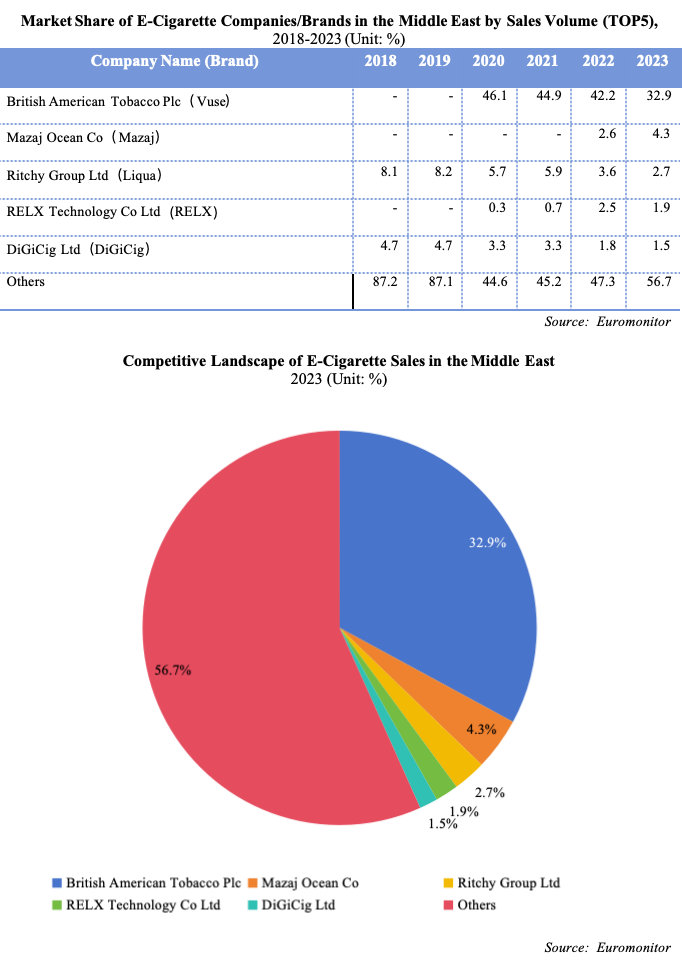
In 2023, within the Middle East e-cigarette market, British American Tobacco Plc (Vuse) ranked first with a market share of 32.9%, followed by Mazaj Ocean Co (Mazaj) with a market share of 4.3%. Other companies/brands each held less than 3% market share. Overall, the Middle East e-cigarette market is relatively concentrated.
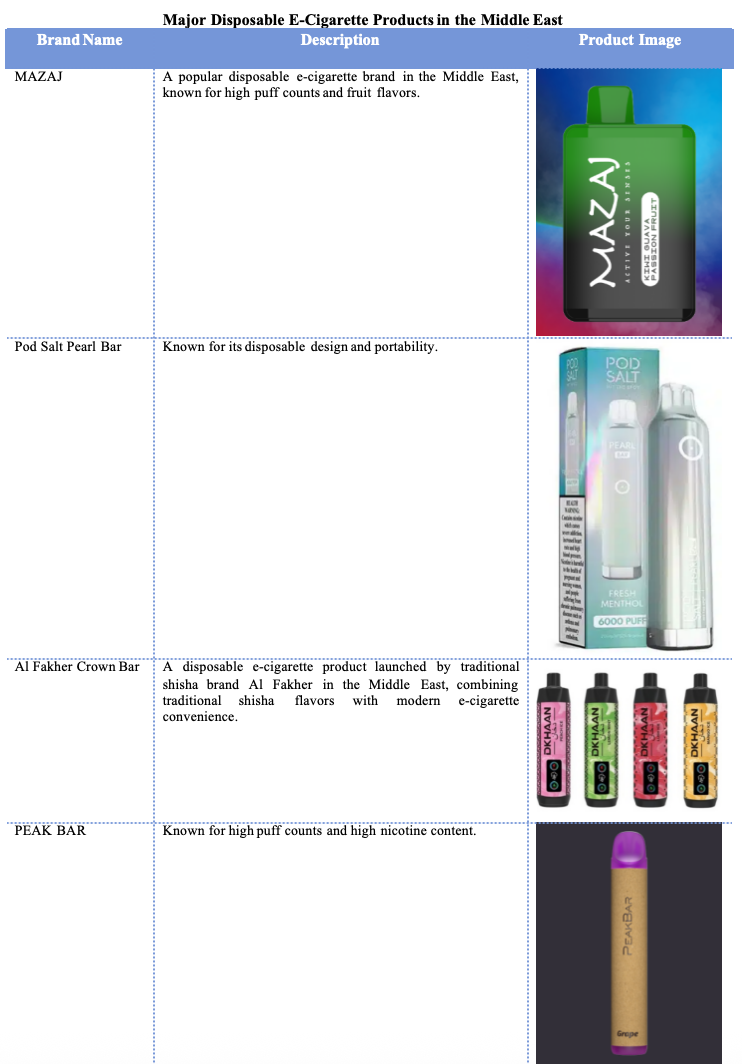
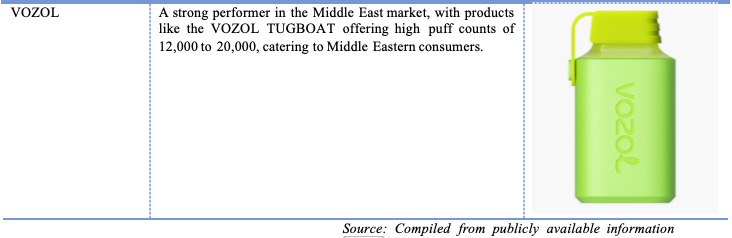
The disposable e-cigarette market in the Middle East is dominated by high-puff products, with numerous brands and fierce competition. Major brands include MAZAJ, TUGBOAT, YUOTO, NASTY, VGOD, VEIIK, HQD, VOOPOO, VNSN, VOZOL, BECO, ASPIRE, LOST VAPE, UWELL, OXVA, SMOK, ELFBAR, and MOTI. These brands cater to the needs of Middle Eastern consumers through high puff counts, diverse flavors, and portable designs. These brands enjoy strong reputations in international markets and hold significant positions in the Middle East.
6 Consumer Insights for Disposable E-Cigarettes in the Middle East
6. 1 Size of the Middle East Smoker Population
(1) Cigarettes
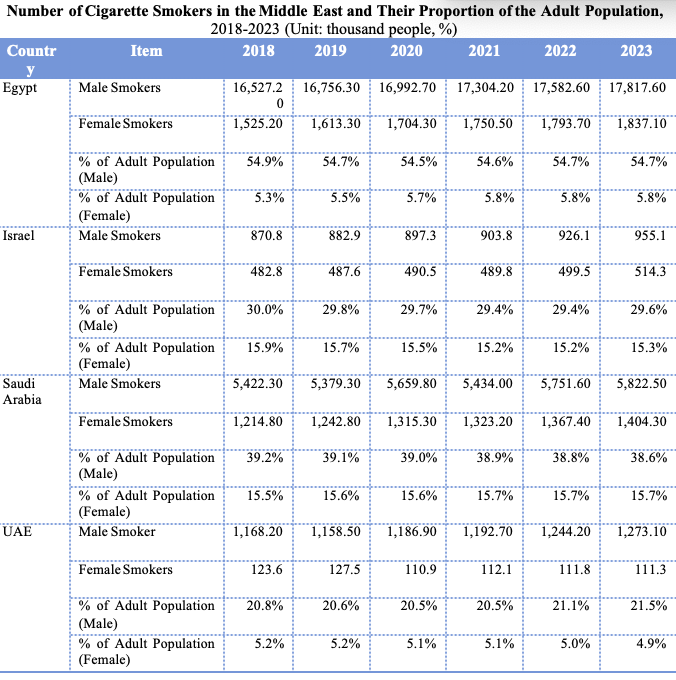
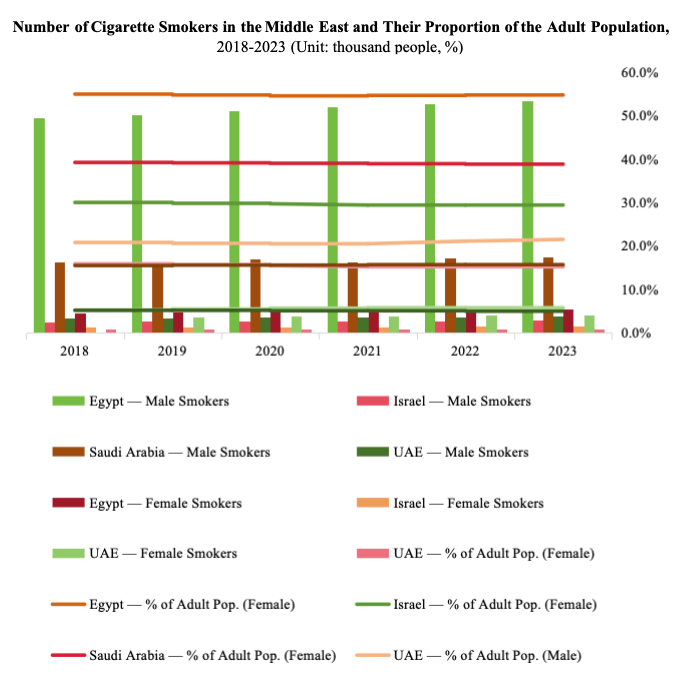
On the consumer side, according to Euromonitor data, among four major Middle Eastern countries in 2023, Egypt had the highest number of male cigarette smokers, approximately 17.818 million, accounting for 54.7% of the adult male population. Female cigarette smokers numbered over 1.837 million, accounting for 5.8% of the adult female population. Overall, the proportion of smokers in the Middle East population is relatively high, with male smokers predominating.
(2)E-cigarettes
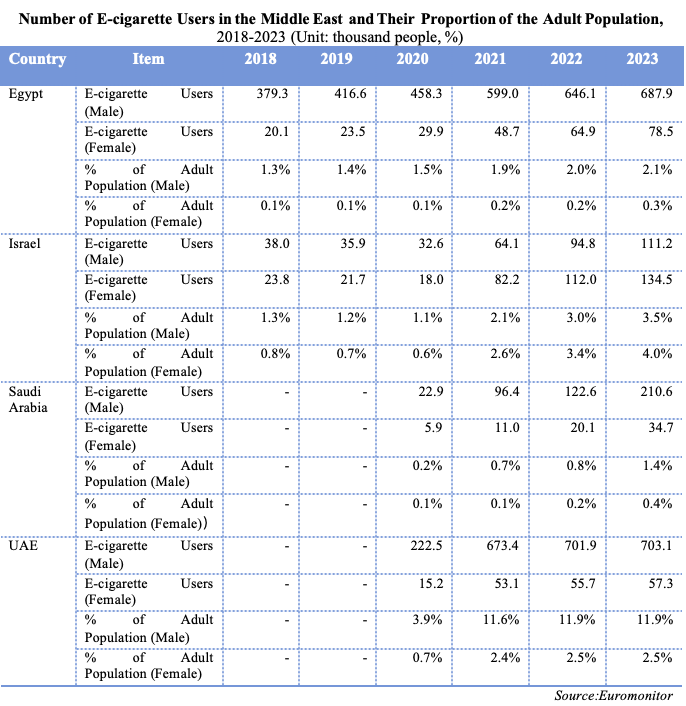
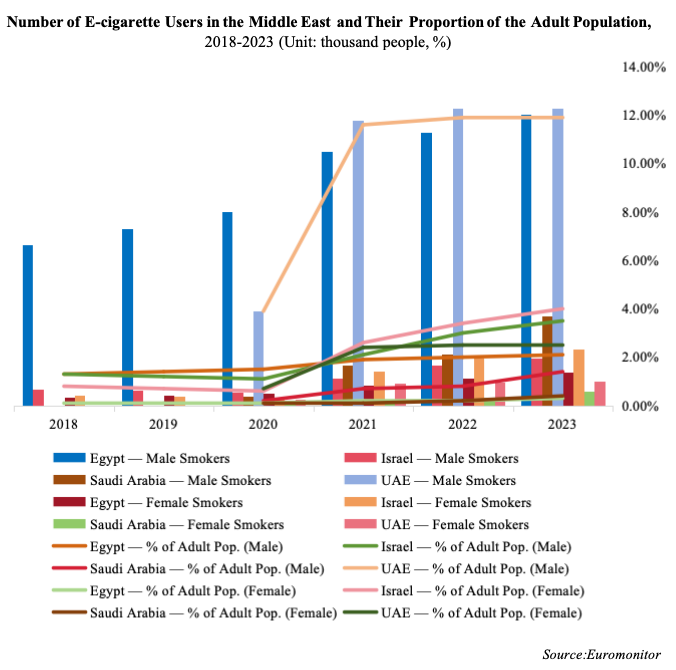
Regarding e-cigarette consumers, according to Euromonitor data, among four major Middle Eastern countries in 2023, the UAE had the highest number of male e-cigarette users, approximately 703,100, accounting for 11.9% of the adult male population. Israel had the highest number of female e-cigarette users, at 134,500, accounting for 4.0% of the adult female population. Overall, the number of e-cigarette consumers in the Middle East is not high, but growth is relatively rapid.
(3)E-cigarette Penetration Rate
◆ Egypt
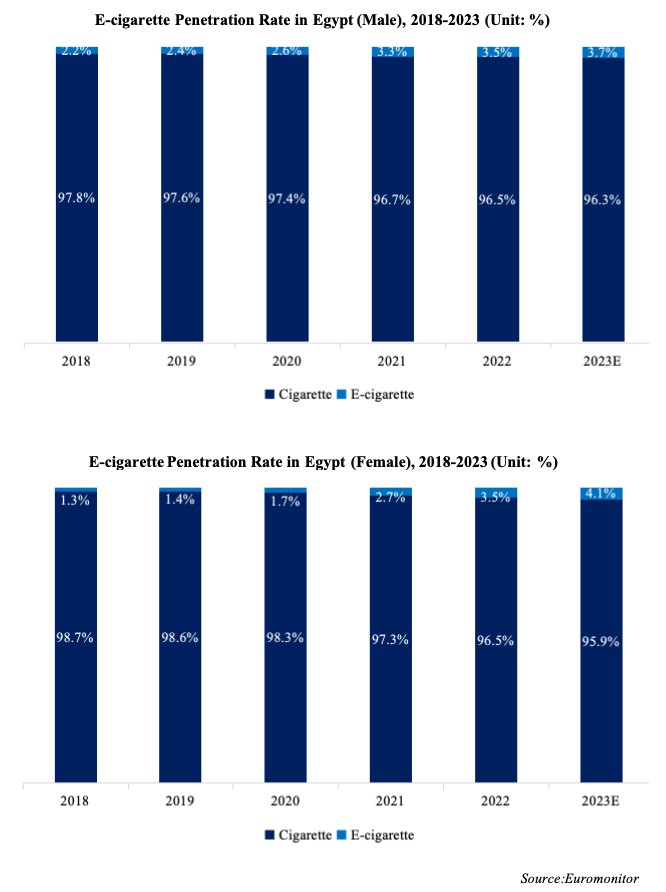
From 2018 to 2023, the proportion of e-cigarette consumers among total smokers in Egypt was relatively low for both males and females, but has shown an increasing trend in recent years. In 2023, male e-cigarette consumers accounted for 3.7% of male smokers, while female e-cigarette consumers accounted for 4.1% of female smokers. Overall, there is significant market space for future growth.
◆Saudi Arabia
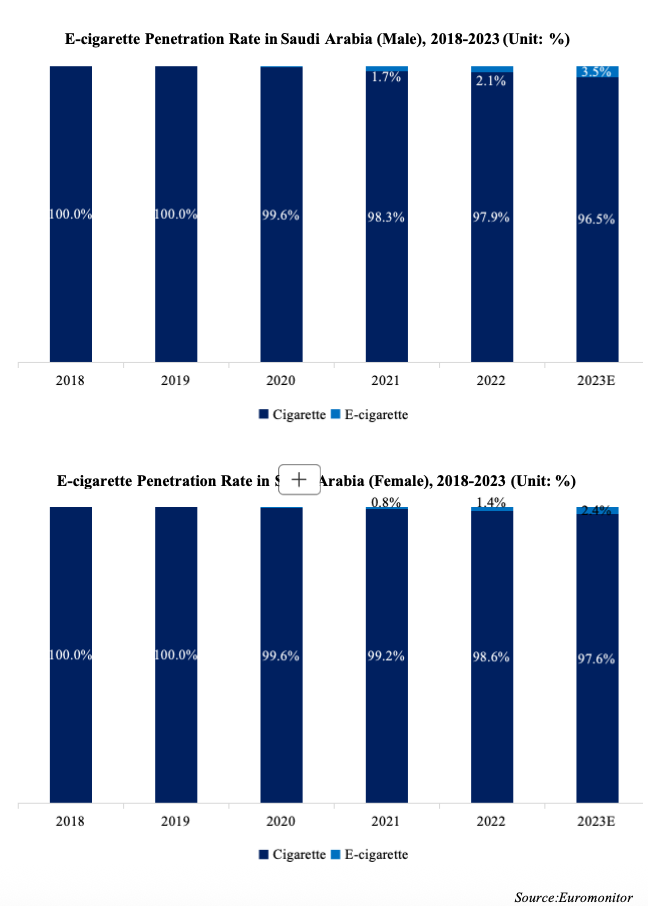
Since e-cigarettes entered the Saudi market in 2020, the number of e-cigarette consumers has grown rapidly for both males and females by 2023, but overall penetration remains at a relatively low level. In 2023, male e-cigarette consumers accounted for 3.5% of male smokers, while female e-cigarette consumers accounted for 2.4% of female smokers.
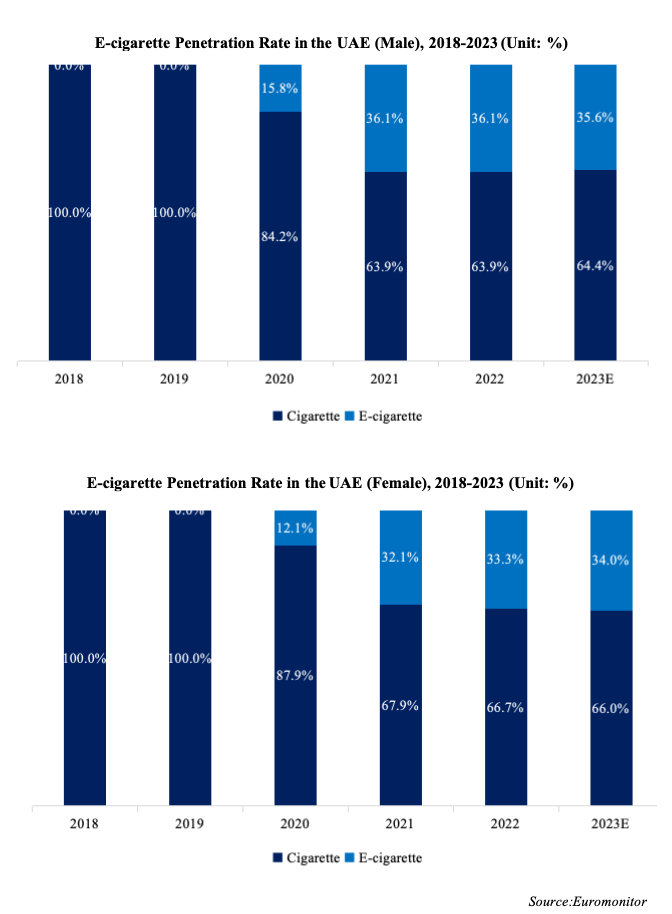
◆ UAE
The situation in the UAE market is completely different from that of Saudi Arabia. Since e-cigarettes entered the market in 2020, they have become popular across the UAE. In 2023, male e-cigarette consumers accounted for 35.6% of male smokers, while female e-cigarette consumers accounted for 34.0% of female smokers.
6. 2 Disposable E-Cigarette Consumption Power in the Middle East
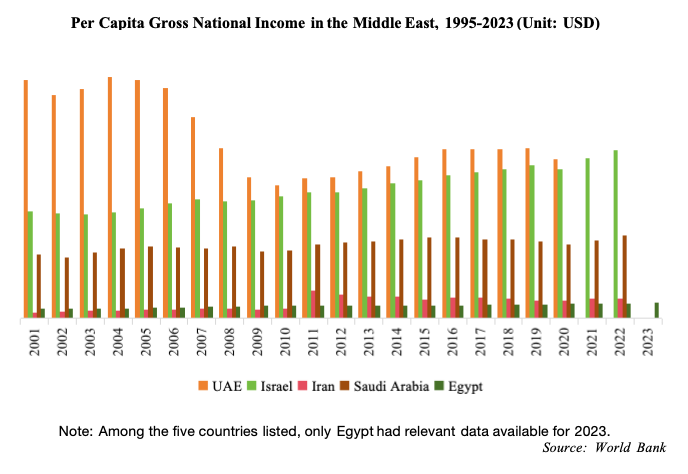
According to World Bank data, from 1995 to 2023, with the exception of the UAE and Iran, where per capita Gross National Income (GNI) experienced significant declines, the per capita GNI of other major Middle Eastern countries has shown fluctuating growth. In 2022, Israel had the highest per capita GNI among major Middle Eastern countries, at USD 43,655.25. Overall, disposable e-cigarette consumption in Middle Eastern countries is significantly influenced by local policies and political situations.